
Searching for Gaston County Warrants
No official public active-warrant search page was located for Gaston County. That absence is itself a useful fact. Sites that claim to list "active Gaston County warrants" are usually third-party aggregators, and they should not be trusted as official. The reliable path runs through official offices and the court tools that show case events.
If a warrant resulted in a booking, the person will appear in the Sheriff's inmate inquiry. If the warrant is tied to a missed court date, the court-date search or the clerk can show the case status. Start with the most likely tool for your situation.
| Tool | Use | Notes |
|---|---|---|
| Active warrant search | Not available | No official public Gaston warrant-search form located. |
| Inmate inquiry | If warrant led to a booking | Search by name, booking number, Global Subject Number, dates, or facility. |
| Court case search | Case events and failures to appear | Portal or clerk terminals may show an order for arrest where public. |
Because no county portal exists, the offices listed below are the official starting points. People search for warrants for many reasons: a job applicant wants to clear up an old issue, a family member worries about a relative, or someone realizes they missed a court date. In each case, an official phone call beats an unofficial database.
Official Gaston County Warrant Contacts
Warrant questions go to a small set of offices. The Sheriff serves warrants and handles custody. The magistrates issue many warrants and process initial appearances. The clerk holds court files and can confirm case status. Use these official numbers rather than a third-party site.
Gaston County Sheriff
425 Dr. Martin Luther King Jr. Way
Gastonia, NC 28052
704-869-6800
Magistrates and Clerk
325 Dr. Martin Luther King Jr. Way
Gastonia, NC 28052
Magistrates (704) 852-3192
Clerk (704) 852-3100
If you are unsure whether a warrant exists, calling the Sheriff or clerk is safer and more accurate than searching an unofficial database.
Types of Warrants in Gaston County
Not all warrants are the same. The type tells you how the warrant arose and how it gets resolved. Some are tied to a new charge, while others follow a missed court date or a probation problem. The list below covers the main types.
- Arrest warrant - issued on probable cause for a criminal charge.
- Order for arrest or bench warrant - often issued after a failure to appear or a probation violation.
- Search warrant - authorizes a search; the application or return may be sealed.
- Fugitive or extradition warrant - used for out-of-county or out-of-state custody.
- Civil process or order - the Sheriff also serves civil papers and evictions.
A bench warrant for a missed court date is one of the most common, and it is also one of the easiest to resolve once you act. An arrest warrant for a new charge is different, because it ties to an active accusation that the District Attorney may pursue. A search warrant does not target a person for arrest at all; it authorizes officers to search a place or thing, and its paperwork can stay sealed while the case develops.
What a Warrant Record May Show
When warrant information is public, it usually appears as a case event rather than a standalone list. The court file or inmate booking carries the detail. The fields below describe what may show through the available tools.
- Case or warrant reference number where public.
- Charge or reason, such as a failure to appear.
- Issuing court or judicial officer.
- Booking details if the warrant led to an arrest.
- Bond or conditions set by a magistrate or judge.
Sealed warrants, juvenile warrants, and investigative affidavits may not appear at all. A blank search does not prove no warrant exists. The only sure way to know is to ask the Sheriff or the clerk directly, since they work from the official records rather than a public web view.
How Warrants Fit Court Recordkeeping
Warrants become part of the court record once they are filed and acted on. North Carolina's court recordkeeping statute, G.S. 7A-109, sets the procedures the clerk follows to index and keep these records. That is the same authority behind the indexes and electronic systems used statewide.
The statute text is published by the General Assembly, shown below.
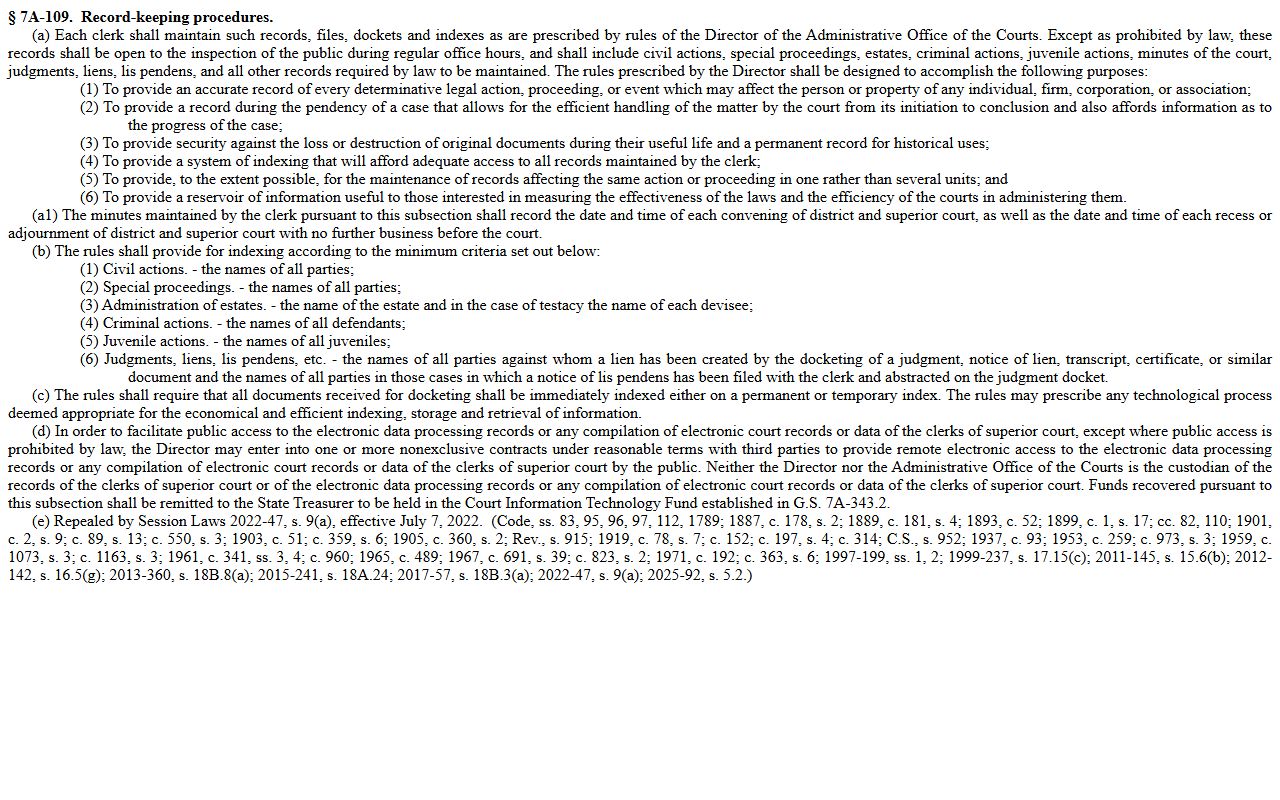
Because warrants are tracked as case events, the court-date search and clerk are the right places to confirm one tied to a case. A warrant on its own is a single document, but once it links to a charge or a court date, it becomes part of a larger file that the clerk maintains. That is why a warrant question often turns into a court-record question. Checking the case status usually tells you more than hunting for the warrant by itself.
How to Resolve an Outstanding Warrant
If you think you have an outstanding Gaston County warrant, handle it carefully. An ignored warrant does not go away, and it can lead to an arrest at an inconvenient time. The steps below outline a safe approach.
- Do not rely on third-party warrant sites for the answer.
- Call the Sheriff, clerk, or magistrates using the official numbers above.
- If the warrant ties to a missed court date, check the case status through the court-date search.
- Ask whether you must appear before a magistrate or judge and whether bond is set.
- If you have a lawyer, contact counsel before appearing.
- If you cannot afford a lawyer and face a qualifying charge, ask about the public defender.
- After the matter is resolved, confirm the case status updates, since systems may lag.
Acting early gives you more options. A judge or magistrate may be able to address bond and conditions before the situation escalates. Turning yourself in on your own terms, ideally with counsel, is almost always better than being arrested unexpectedly at home or at work.
Failure to Appear and Orders for Arrest
A missed court date is a frequent reason a warrant gets issued. When a person does not show up, the court can enter an order for arrest, sometimes called a bench warrant. The case file may also note a failure to appear. These show up as case events, which is why the court-date search and the clerk are the right tools to check.
If you missed a date, the fix is usually to get back on the calendar and clear the order. A judge or magistrate decides whether bond or new conditions apply. Do not wait for an arrest to deal with it. For checking the underlying date and case status, the Gaston County court dockets page explains the calendar and court-date search.
An order for arrest stays in effect until the court recalls it or the person is brought in. Clearing it promptly limits the disruption to work, travel, and family.
Lawyers and the Public Defender
If you face a warrant tied to a criminal charge, talk to a lawyer before you act. A private attorney or the public defender can sometimes arrange how you turn yourself in and argue for reasonable bond. The District Attorney for Prosecutorial District 38 represents the state, not you, so do not rely on the prosecutor for advice.
People who cannot afford counsel and face a qualifying charge may use the Public Defender for Defender District 38. The office answers at 704-852-3220 and can tell you whether you have a lawyer assigned. Legal Aid of North Carolina also helps eligible clients with some civil and expunction matters, with statewide intake at 1-866-219-5262.
Clearing a Record After a Warrant Is Resolved
Once a charge tied to a warrant is dismissed or you are found not guilty, you may be able to clear the record. North Carolina's expunction statutes set the eligibility rules. Dismissed charges and not-guilty findings may be eligible under G.S. 15A-146.
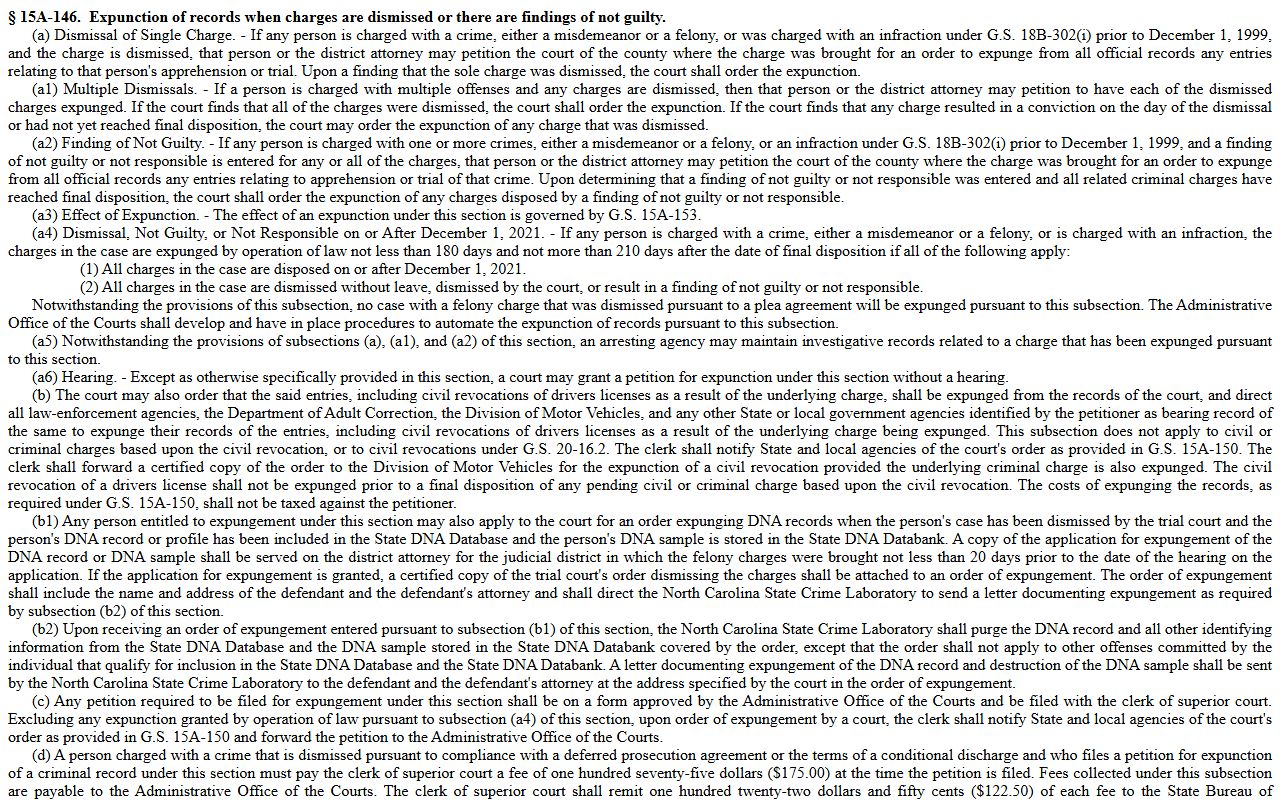
Certain nonviolent convictions may be expunged under G.S. 15A-145.5 after a waiting period, as the statute explains.
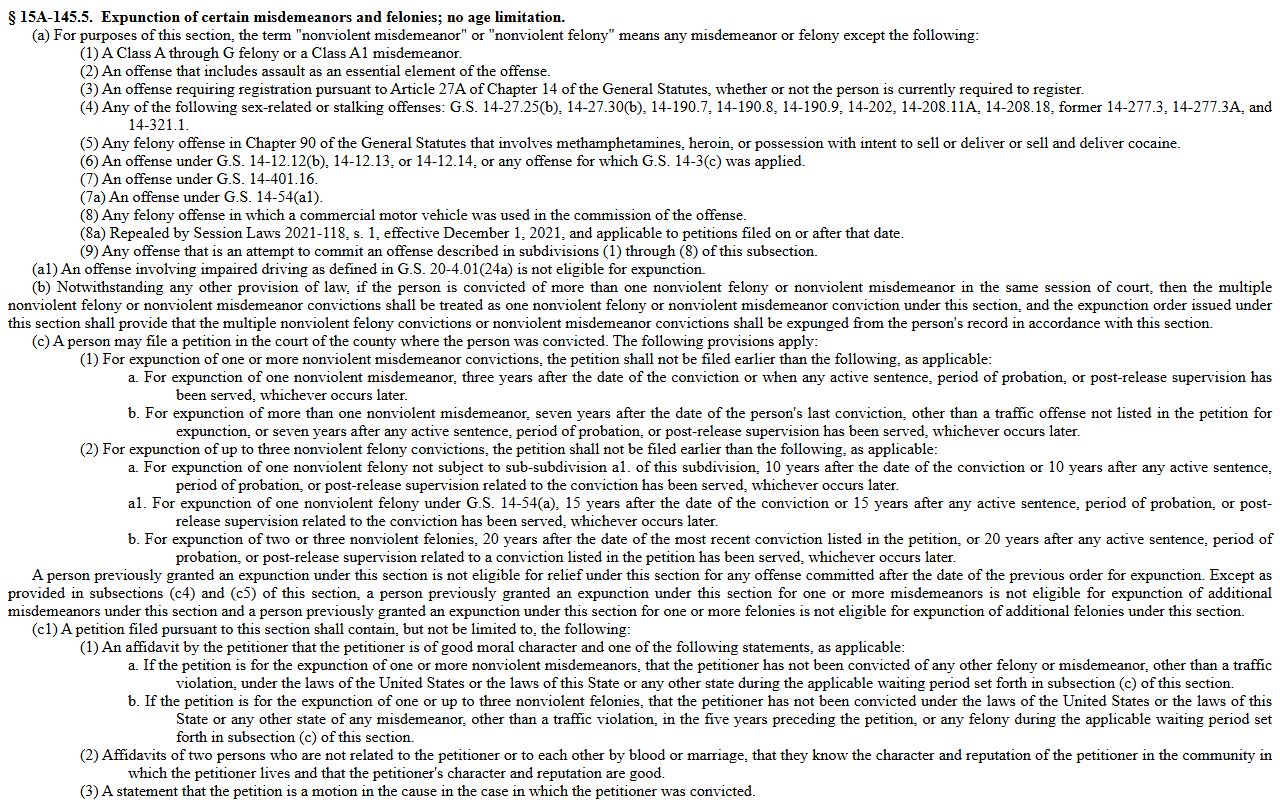
Expunction petitions are filed with the clerk in the county of charge or conviction. The general filing fee is $175, though some dismissed or not-guilty expunctions carry no fee. See Gaston County arrest records for more on sealed and expunged records.
Sealed and Juvenile Warrants
Some warrant materials are never public. Search warrant applications and returns can be sealed by court order while an investigation is active. Juvenile warrants tie to confidential juvenile records under Chapter 7B. Certain victim and protected-party details may also be withheld for safety.
This is why the official offices matter so much for warrants. A public website cannot show what the law keeps sealed, but the Sheriff and the clerk work from the complete records. When the answer truly matters, a direct call is the only reliable check.
Note: A clear result on any tool does not guarantee there is no Gaston County warrant, since sealed and juvenile warrants are not shown publicly.