
The Clerk of Superior Court Estates Division
Probate in Gaston County runs through the Estates Division of the Clerk of Superior Court. There is no separately elected probate judge. The clerk administers estate files, admits wills, and issues letters testamentary or letters of administration. The clerk also handles inventories, accountings, creditor notices, and related special proceedings.
The Judicial Branch Wills and Estates help topic is the right place for statewide process guidance. For local filings and questions, the Gaston County contact directory lists the Clerk of Superior Court at (704) 852-3100.
Clerk of Superior Court, Estates Division
325 Dr. Martin Luther King Jr. Way, Suite 1004
Gastonia, NC 28052
(704) 852-3100
Mon-Fri 8:30 AM-5:00 PM
The Wills and Estates help topic outlines how estates work statewide.
Use it alongside the local clerk, who applies that process to Gaston County estates. The clerk acts in a judicial role for estates, deciding many matters that, in other states, a probate judge would handle. That is why Gaston County probate questions route to the Clerk of Superior Court rather than to a separate court office.
The clerk keeps paper records in secure storage and digital copies on courthouse servers. Staff can help the public locate a file, but they cannot give legal advice or decide a contested estate question for you.
What Gaston County Probate Records Include
Probate records document the steps of settling an estate. They start with a will or an application and move through asset collection, debt payment, and distribution. The records are largely public, though some guardianship and medical details can be restricted. The list below shows the common record categories.
- Wills and codicils, plus the application to probate a will.
- Applications for letters testamentary or letters of administration.
- Estate inventories listing assets.
- Annual and final accountings.
- Creditor notices, claims, and clerk orders.
Small-estate collection by affidavit and guardianship estate records also run through the clerk where they apply. Not every death needs a full estate. When assets are small or pass outside probate, a simplified process may apply, and the clerk can explain which path fits.
An estate file tells a story in order. It opens when someone applies, shows the assets in the inventory, tracks debts and claims, and closes with a final accounting. Reading the file in that sequence makes it far easier to follow where an estate stands.
How to Search Gaston County Estate Files
Estate case information can be searched on the public self-service terminals in the clerk's office, the same way criminal and civil information is searched. The full estate file is viewed at the clerk's office in the county where the estate is located. Copies are made for a fee.
A sample estate record carries a set of standard fields. The table below shows what an estate file typically lists.
| Field | What It Shows |
|---|---|
| Estate File Number | The identifier for the estate. |
| Decedent Name | The deceased person whose estate is open. |
| Date of Death | When the decedent died. |
| Personal Representative | The executor or administrator handling the estate. |
| Letters Issued Date | When the clerk granted authority to act. |
| Inventory and Accountings | Assets and the record of receipts and disbursements. |
Restricted data such as Social Security numbers, account numbers, and sealed guardianship details are not shown. To find an estate, you usually search by the decedent's name. If several estates share a similar name, the estate file number is the surest way to tell them apart.
Online case information can point you to an estate, but the official file and certified copies still come from the clerk. For older estates that predate current online data, the clerk's office and archived records are the right route.
Probate Terms Explained
Probate uses words that confuse families during an already hard time. A short glossary helps. The definitions below cover the terms that come up most in a Gaston County estate.
- Decedent
- The person who died and whose estate is being settled.
- Executor
- The person named in a will to carry out the estate.
- Administrator
- The person appointed to settle an estate when there is no will.
- Intestate
- Dying without a valid will, so state law sets who inherits.
- Letters testamentary
- The clerk's document giving an executor authority to act.
- Guardianship
- A court-supervised role managing a minor's or incompetent adult's affairs.
If a term in a file is unclear, clerk staff can point you to the right form, though they cannot give legal advice. Whether a person dies with or without a will changes the path. With a valid will, an executor is named; without one, the clerk appoints an administrator under state law.
Gaston County Probate Fees
Estate and special proceeding costs in North Carolina are set by statute under G.S. 7A-307. The clerk calculates the current local amount, since some costs are tied to the value of the estate. Confirm the exact figure with the clerk before you file.
| Item | Source |
|---|---|
| Estate filing and administration costs | Set under G.S. 7A-307 |
| Value-based estate costs | Calculated by the clerk |
| Copy and certification fees | Charged by the clerk per page |
The statute that sets estate and special proceeding costs is published by the General Assembly.
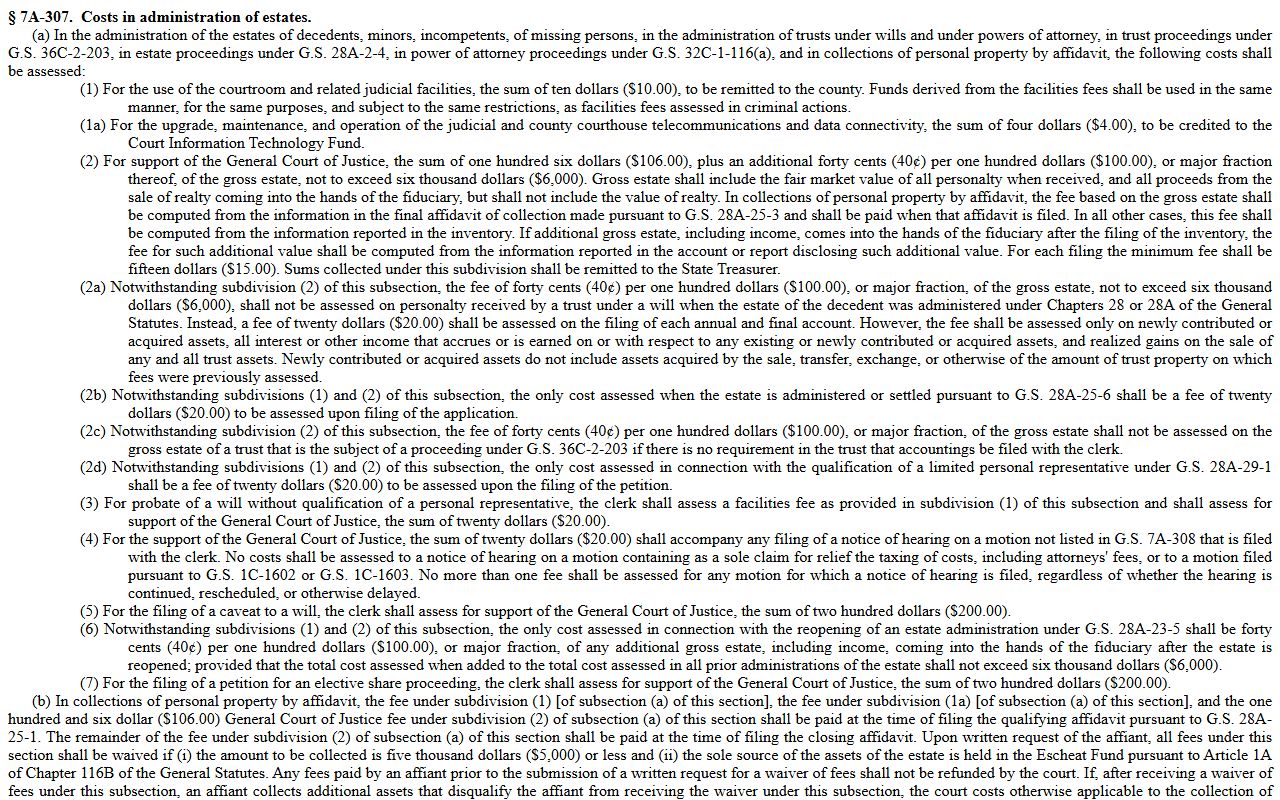
Because some costs scale with estate value, ask the clerk for a current estimate rather than assuming a flat fee.
Step-by-Step Estate Administration
Opening an estate follows a set order. The personal representative gathers documents, files with the clerk, and then carries out duties under the clerk's oversight. The steps below outline the path.
- Confirm the decedent lived in Gaston County or owned property tied to it.
- Contact the Gaston Clerk of Superior Court at (704) 852-3100.
- Bring the original will, death certificate, applicant ID, and heir and asset information.
- File the appropriate estate application.
- The clerk issues letters if the application is approved.
- Give required notices, gather assets, pay claims, and file the inventory and accountings.
- Close the estate, or use counsel for contested or real estate issues.
For eligible filers, Legal Aid and self-help resources can help with forms and process questions. The personal representative carries real duties, including notifying creditors, protecting assets, and filing accurate accountings on time. Missing a step can delay closing the estate, so many people keep close contact with the clerk's office throughout.
Most estate forms are statewide North Carolina judicial forms, searchable by keyword or form number. If a Gaston-specific form is not posted, the clerk's office is the place to ask rather than a third-party site.
Timing matters in an estate. The clerk sets deadlines for the inventory and the accountings, and a personal representative who misses them can face follow-up from the office. Bring the original will, the death certificate, your ID, and a list of heirs and assets to your first visit, since that information shapes which application you file and how the estate proceeds.
Guardianship and Restricted Records
Guardianship is related to probate and also runs through the clerk. It covers petitions, incompetency proceedings, guardian appointments, and accountings. Some guardianship and medical details are confidential, so not every page in a guardianship file is open to the public. A guardian may manage a person's finances, their personal care, or both, and the clerk supervises the guardian's reports.
The Judicial Branch guardianship help topic explains the process.
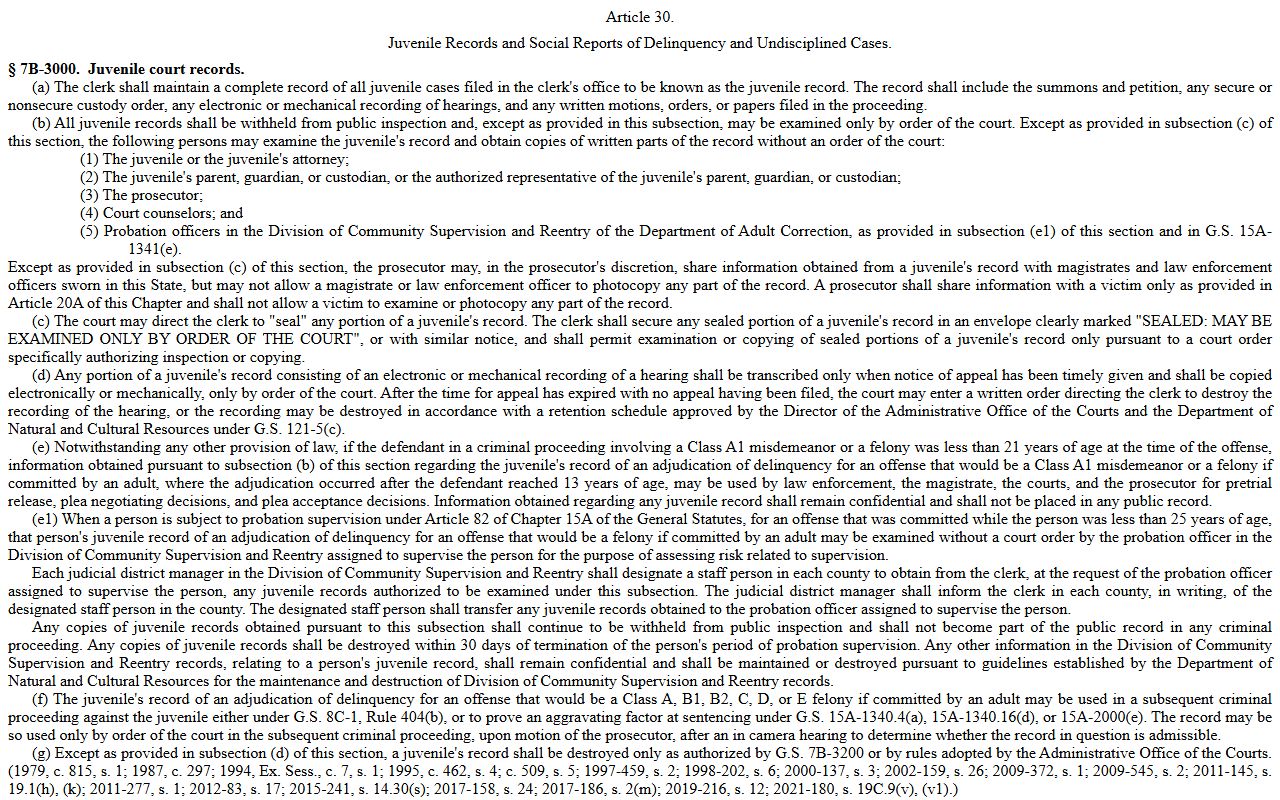
Records involving minors carry extra protection. Juvenile records are confidential under G.S. 7B-3000, which limits who can see them.
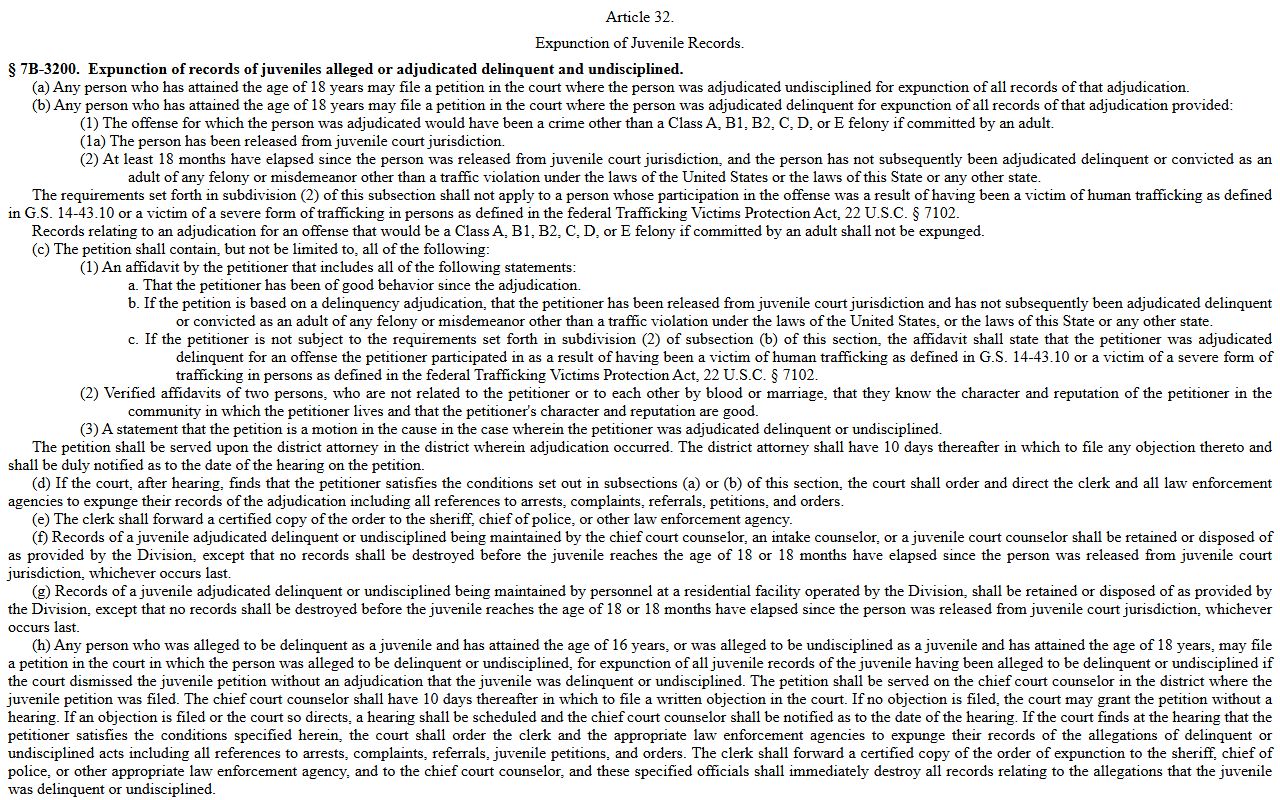
A separate juvenile expunction process under G.S. 7B-3200 governs how certain juvenile records are cleared.
These confidentiality rules explain why a guardianship file involving a minor is handled with more care than an ordinary estate.
Certified Copies and Legal Help
Certified estate copies come from the clerk, not the Register of Deeds. Keep in mind that deed copies and court certified copies are requested from different offices, even though both sit in the same courthouse. The clerk charges copy and certification fees per page.
Many users arrive expecting one office to handle everything, but a deed copy comes from the Register of Deeds while an estate copy comes from the clerk. Sorting that out before you visit saves a second trip. A certified copy carries the clerk's seal and is the version courts and agencies accept.
For help with an estate, statewide forms, Guide & File, and Legal Aid of North Carolina at 1-866-219-5262 are good starting points. For related records, see Gaston County marriage and divorce records, the Clerk of Superior Court page, and court records.