
District 38 and the Gaston County Trial Courts
Gaston County is District 38 across prosecution, Superior Court, and District Court. North Carolina runs a unified court system, so there are no county courts at law or justice-of-the-peace courts. The same district number appears on the Prosecutorial District 38, Superior Court District 38, and District Court District 38 labels. Older web sources may show different numbering, but the current official label is 38.
Both trial divisions operate from the Gaston County Courthouse. The table below lists the main court offices and their direct numbers.
| Office / Court | Address | Phone |
|---|---|---|
| Gaston County Courthouse | 325 Dr. Martin Luther King Jr. Way, Suite 1004, Gastonia | (704) 852-3100 |
| Superior Court Judges | Same courthouse | (704) 852-3119 |
| District Court Judges | Same courthouse | (704) 852-3117 |
| District Attorney, District 38 | 325 Dr. M.L.K. Jr. Way, Suite 2003 | (704) 852-3113 |
| Public Defender, District 38 | 325 Dr. M.L.K. Jr. Way, Gastonia | 704-852-3220 |
| Magistrates | Same courthouse complex | (704) 852-3192 |
The Clerk of Superior Court, at (704) 852-3100, is the custodian for case files from both divisions. The District Attorney represents the state in criminal cases and prepares the criminal trial docket, while the Public Defender represents eligible defendants. These are separate offices with opposite roles, and both work within District 38.
District Court vs Superior Court
The two divisions split the work by case type and seriousness. District Court is the busy, lower-level division. Superior Court is the general trial division for the most serious matters. Magistrates sit below both and handle initial steps and small claims. The comparison below sorts out who hears what.
| Point | District Court | Superior Court | Magistrate |
|---|---|---|---|
| Criminal | Misdemeanors and infractions | Felonies | Initial appearance, bond |
| Civil | Lower-value civil, domestic | Larger civil cases | Small claims |
| Other | Traffic, juvenile | Estate appeals, special proceedings | Warrants and process |
A case can move between levels. A felony often starts with District Court appearances, then moves to Superior Court. A small claims case can be appealed to District Court for a new hearing.
This is why the same matter can show events in more than one division over time. A person tracking a case should not be surprised to see it begin in District Court and continue in Superior Court. The Clerk of Superior Court holds the files for both, so one office can point you to the full history.
How a Case Moves Through the System
Cases follow a path from the lower steps to the higher courts. Knowing the order helps you predict where a case sits and which record to pull. The flow below shows the typical route for criminal and small claims matters.
Criminal: Arrest and magistrate › District Court first appearance › Superior Court for felonies › Court of Appeals › Supreme Court
Small claims: Magistrate small claims › District Court on appeal › higher review where allowed
Appeals from the trial courts go to the North Carolina Court of Appeals, with the North Carolina Supreme Court as the highest court. Estates and special proceedings run through the Clerk of Superior Court rather than a separate probate judge.
Reading the flow in order helps you find a record. If a case has moved up, the newer events sit in the higher court, while the early history stays in the lower one. The clerk's file ties the stages together, so a single request can capture the whole path.
Traffic and Misdemeanor Cases
District Court carries the heaviest volume because it handles traffic and misdemeanor cases. A speeding ticket, a minor charge, or an infraction is generally a District Court matter. Serious traffic offenses like DWI are criminal cases, not simple payable tickets.
For the citation and traffic record process, see Gaston County traffic court records. For misdemeanor and other criminal records, see arrest records and court records.
Most traffic and misdemeanor cases resolve in District Court without ever reaching Superior Court. A defendant convicted of a misdemeanor in District Court generally has a right to appeal for a new trial in Superior Court. That appeal right is one reason the two divisions are linked even though they handle different case loads.
Small Claims and Magistrates
Small claims cases start before a magistrate. These are civil disputes like money owed, landlord-tenant matters, and summary ejectment. The magistrate hears the case and enters a judgment. A party who loses can appeal to District Court for a new hearing.
The Judicial Branch lawsuits and small claims help topic explains the process.
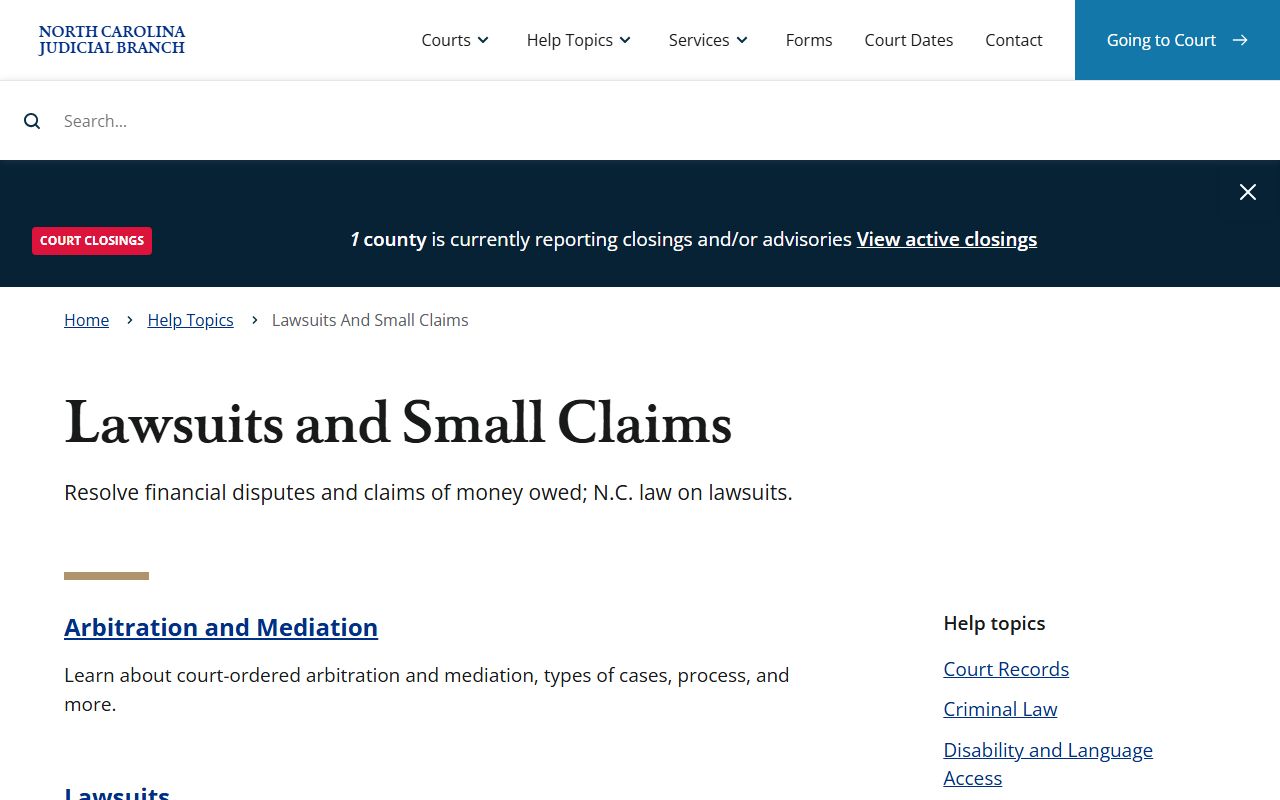
Magistrates also handle initial appearances, set bond in many cases, and issue certain process, reachable at (704) 852-3192. Small claims is meant to be accessible to people without lawyers, with simpler rules than a full District Court civil case. Even so, court staff can only explain procedure, not advise you on how to win.
Domestic and Juvenile Cases
District Court handles family and domestic matters, including divorce, custody, child support, and domestic violence protective orders. Some family details may be restricted in the public record. Juvenile matters, including delinquency and abuse or neglect cases, are generally confidential under Chapter 7B.
Custody mediation, at (704) 852-3338, and the Guardian ad Litem program, at (704) 852-3260, support family and child-related cases. For divorce judgments, see Gaston County marriage and divorce records.
Juvenile confidentiality is strict. A public court-records page should not suggest juvenile delinquency or abuse cases can be browsed like adult cases. Authorized justice agencies can use some juvenile information in later proceedings, but that is not ordinary public access, and juvenile expunction follows its own process.
Court Dates and Calendars
Both divisions publish calendars through the North Carolina Judicial Branch. The county page links civil and criminal calendars, and the court-date search lets you look up a date by name or citation number. Calendars change often, so confirm a date with the clerk before you appear.
For the full calendar and docket walkthrough, see Gaston County court dockets. A missed court date can lead to an order for arrest, covered on the warrant records page.
eFiling and Guided Filing
North Carolina's eCourts system supports electronic filing and guided filing for supported case types. File & Serve handles eFiling, and Guide & File walks self-represented filers through certain forms. These tools are part of the statewide Enterprise Justice rollout completed in October 2025.
The File & Serve eFiling portal is the official electronic filing tool.
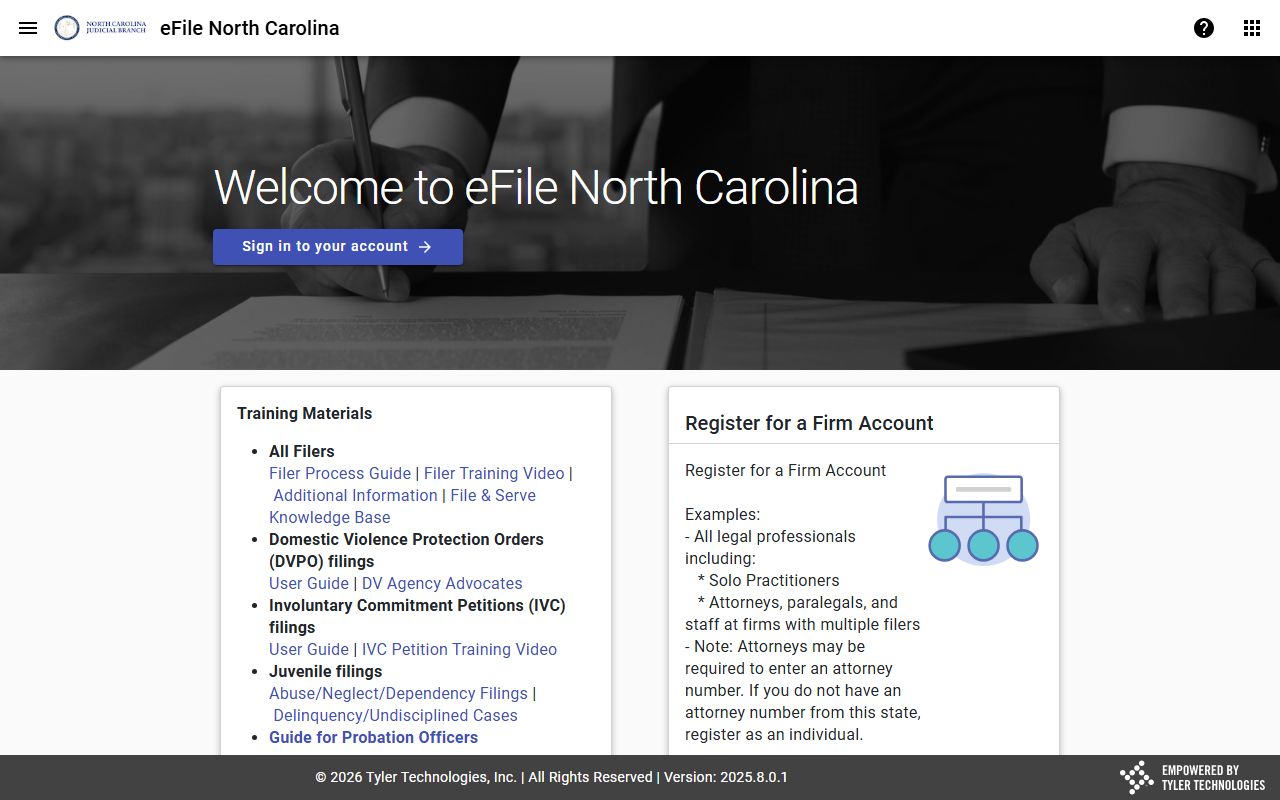
Court staff can explain filing procedures and provide public forms, but they cannot give legal advice. Most North Carolina court forms are statewide, searchable by keyword or form number, and the same forms are used in District 38 as elsewhere in the state. If a Gaston-specific local form or rule is not posted online, the county page directs people to contact courthouse personnel rather than rely on a third-party site.
The eCourts tools also tie into payments. The Gaston County payment information page explains paying court fees, fines, and traffic citations, including payment by mail with a money order or certified check. Online payment runs through the same statewide services, so a person with a case in District Court can often handle filing, searching, and paying through connected official systems.
Adult Treatment Court
Gaston County, District 38, has an Adult Treatment Court. It is an intermediate punishment aimed at nonviolent repeat offenders with substance use, mental health, or co-occurring disorders. The program works to cut drug dependency and repeat offending while helping participants become productive community members.
The team can include judges, prosecutors, defense counsel, treatment providers, and supervision officers. It is one of the specialty programs the county court system links, alongside mediation and Guardian ad Litem programs. Programs like this aim to address the cause of repeat offending rather than only the charge, which can ease pressure on both the courts and the jail.
Federal Courts Serving Gaston County
Gaston County state cases are separate from federal court. For federal trial-court purposes, the county is in the Western District of North Carolina. The U.S. District Court there handles federal crimes, federal civil cases, and related matters.
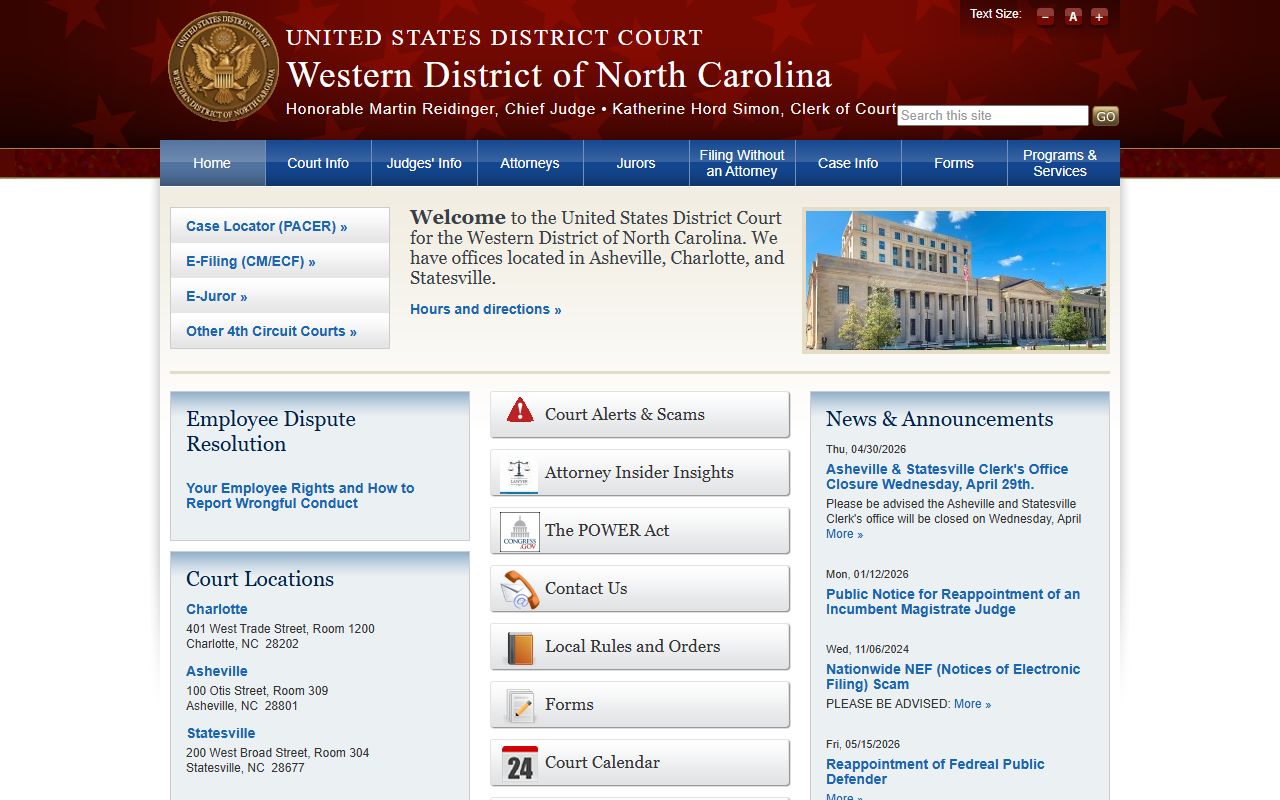
The U.S. Bankruptcy Court for the Western District handles bankruptcy filings.
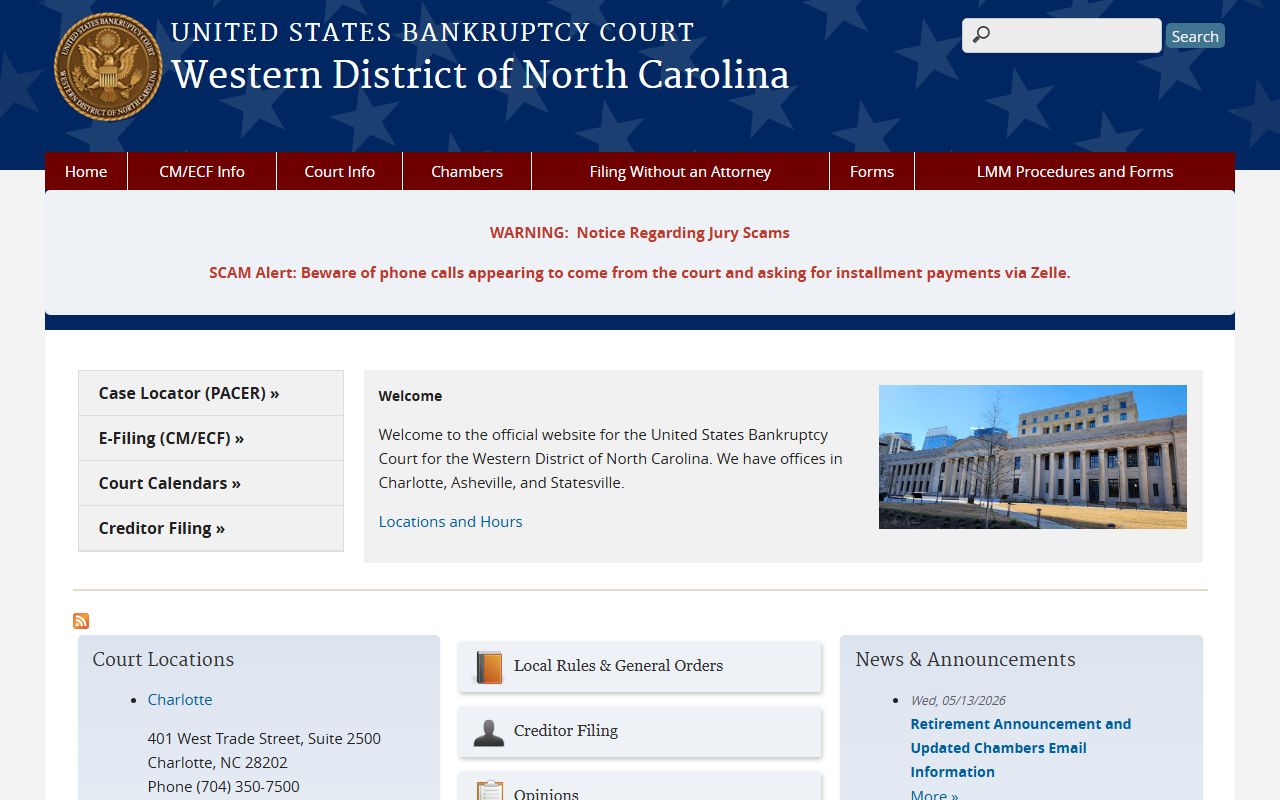
Appeals from the Western District go to the U.S. Court of Appeals for the Fourth Circuit.
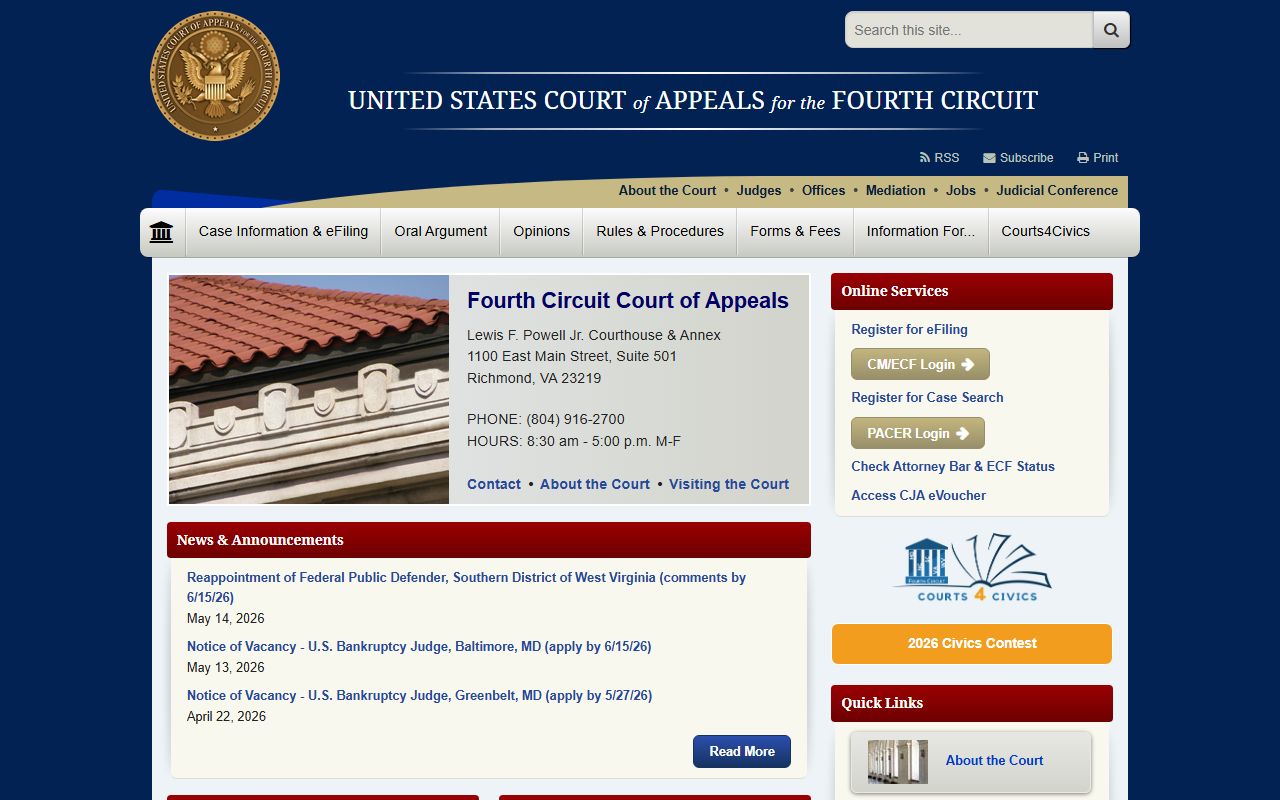
Federal dockets are reached through PACER, not the Gaston County clerk. A Gaston charge stays in state court unless the U.S. Attorney prosecutes it federally. There is no federal courthouse in Gaston County itself; federal functions for this region run through Western District locations such as Charlotte. For released federal defendants and federal record tools, see Gaston County released inmates.