
The Clerk of Superior Court in North Carolina
North Carolina uses the Clerk of Superior Court as the elected court clerk in each county. The office is the public face for court files, civil filings, criminal files, special proceedings, estates, copies, and transcript or audio requests. The clerk also keeps the public self-service terminals where people search case information.
The clerk is not the same as the Register of Deeds. The Register, a separately elected office, handles deeds, real estate instruments, marriage licenses, birth and death certificates, notary records, and passport acceptance. Both sit in the same courthouse, which is why people sometimes confuse the two.
The clerk also acts in a judicial role for many matters, especially estates and special proceedings. That is why the office decides things a probate judge would handle in other states. Clerk staff can explain procedures and provide public forms, but they cannot give legal advice or tell you how a case should turn out.
Clerk of Superior Court
325 Dr. Martin Luther King Jr. Way, Suite 1004
Gastonia, NC 28052
(704) 852-3100
Mon-Fri 8:30 AM-5:00 PM
Court Files and Public Terminals
The Judicial Branch says criminal case information can be searched at a public self-service terminal in a clerk's office in any county, by defendant name, case number, or victim or witness name. Civil, special proceeding, and estate information can also be reached from those terminals. The paper file is viewed in the clerk's office in the county where the case is located, and copies are made for a fee.
So the clerk offers two layers of access. Online and terminal searches give case information, while the clerk supplies the official file and certified copies. For a person performing a background check, the Judicial Branch directs them to the clerk's office rather than the online Portal.
For the full online search walkthrough, see Gaston County court records.
The public terminals matter most when online results look incomplete. Older, complex, or sensitive cases may not show fully online, and the terminal plus the paper file fill that gap. North Carolina finished its eCourts rollout in all 100 counties on October 13, 2025, so Gaston case data now lives in the statewide Enterprise Justice system that the clerk works from.
Estates and Special Proceedings
The clerk's estates division administers wills, estate files, and the letters a personal representative needs. The clerk also handles special proceedings such as partitions, foreclosures, and name changes. These are filed and viewed through the clerk, not a separate probate court.
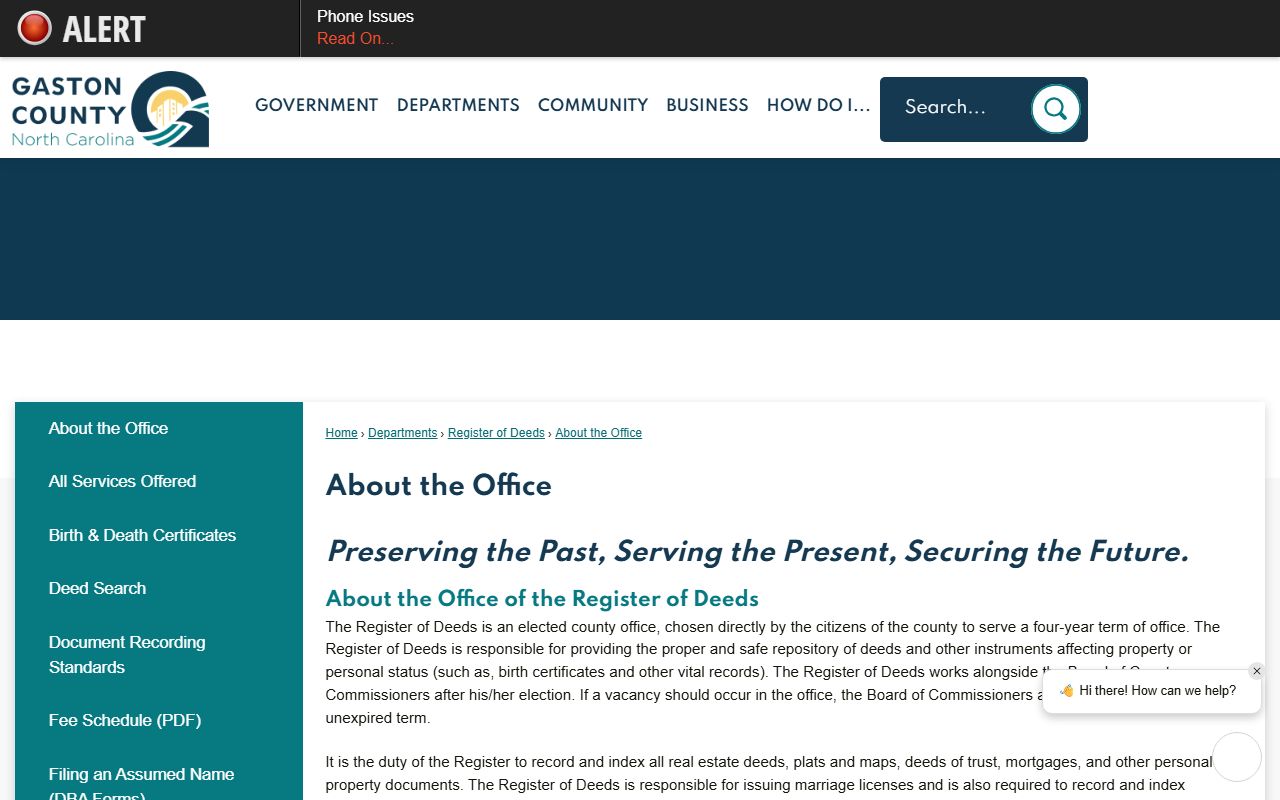
The Register of Deeds office, by contrast, describes its own duties in detail, which helps show the line between the two offices.
For the estate process in full, see Gaston County probate records.
Estate files are largely public, though some guardianship and medical details are restricted. A personal representative files an application, gathers assets, pays valid claims, and files inventories and accountings under the clerk's oversight. The clerk issues letters that prove the representative's authority to act.
Divorce Judgments and Court Orders
A divorce judgment is a court record from the clerk in the county where the divorce was granted. In Gaston County, that is the Clerk of Superior Court. The clerk copies divorce judgments for a fee. A divorce judgment is different from a divorce certificate, which comes from North Carolina Vital Records.
Bring the party names, an approximate date, and a case number if you have one. See Gaston County marriage and divorce records for the full request path and the difference between the judgment and the certificate.
Transcripts and Audio Recordings
Transcript and audio requests also run through the clerk. Not every hearing is recorded. The Judicial Branch says criminal District Court proceedings are generally not recorded except for certain felony pleas or when a judge orders it. Court reporters and digital recording technicians capture proceedings, and a transcriptionist prepares the written transcript.
Nonconfidential audio is requested on Form AOC-G-114, while confidential case recordings need court permission on Form AOC-G-115. Do not assume a full transcript exists for every court date.
This catches many people off guard. They expect a written record of every hearing, but a transcript is usually prepared only when someone orders one, such as for an appeal. The clerk can tell you whether a recording exists and which form applies to your request.
How to Request a Certified Copy
A certified copy carries the clerk's seal and is the version courts and agencies accept. An uncertified copy is fine for personal review but not for formal use. Knowing which you need before you ask avoids paying for the wrong one. The steps below outline how to request a certified copy from the clerk.
- Identify the case number or the parties and approximate date.
- Contact or visit the Clerk of Superior Court at (704) 852-3100.
- Ask for a certified copy of the specific document or judgment.
- Pay the clerk's copy and certification fees.
- Confirm whether the record is available online or only in the paper file.
For older records that do not appear online, the clerk's office and archived records are the right route. If you cannot visit in person, ask the clerk whether the copy can be requested by mail and what payment they accept. Keep your request details and any receipt in case you need to follow up on the order.
Have the right detail ready before you ask. A case number is the fastest path, but the parties' names and an approximate date also work. For a divorce judgment, an estate, or a criminal case, the clerk pulls from the same court file system, so one office can serve very different requests. The more precise your information, the faster the clerk can locate the document.
Remember that a certified copy and a plain copy are not the same. If an agency, an employer, or another court asks for an official document, request the certified version. A plain printout from a public terminal will not carry the clerk's seal, and many formal uses will reject it.
Clerk Copy Fees
Court copy and certification fees are set by statute and the Judicial Branch, so the clerk charges those rates. Civil action costs tie to G.S. 7A-308, and estate and special proceeding costs to G.S. 7A-307. Because amounts can change, confirm the current charge with the clerk. The table below shows the fee framework.
| Item | Fee Basis |
|---|---|
| Plain copy, per page | Clerk copy fee |
| Certified copy | Clerk certification fee |
| Civil action costs | Set under G.S. 7A-308 |
| Estate and special proceeding costs | Set under G.S. 7A-307 |
Note: Clerk fees differ from Register of Deeds fees, so a deed copy and a court copy are quoted by different offices.
Clerk vs Register of Deeds
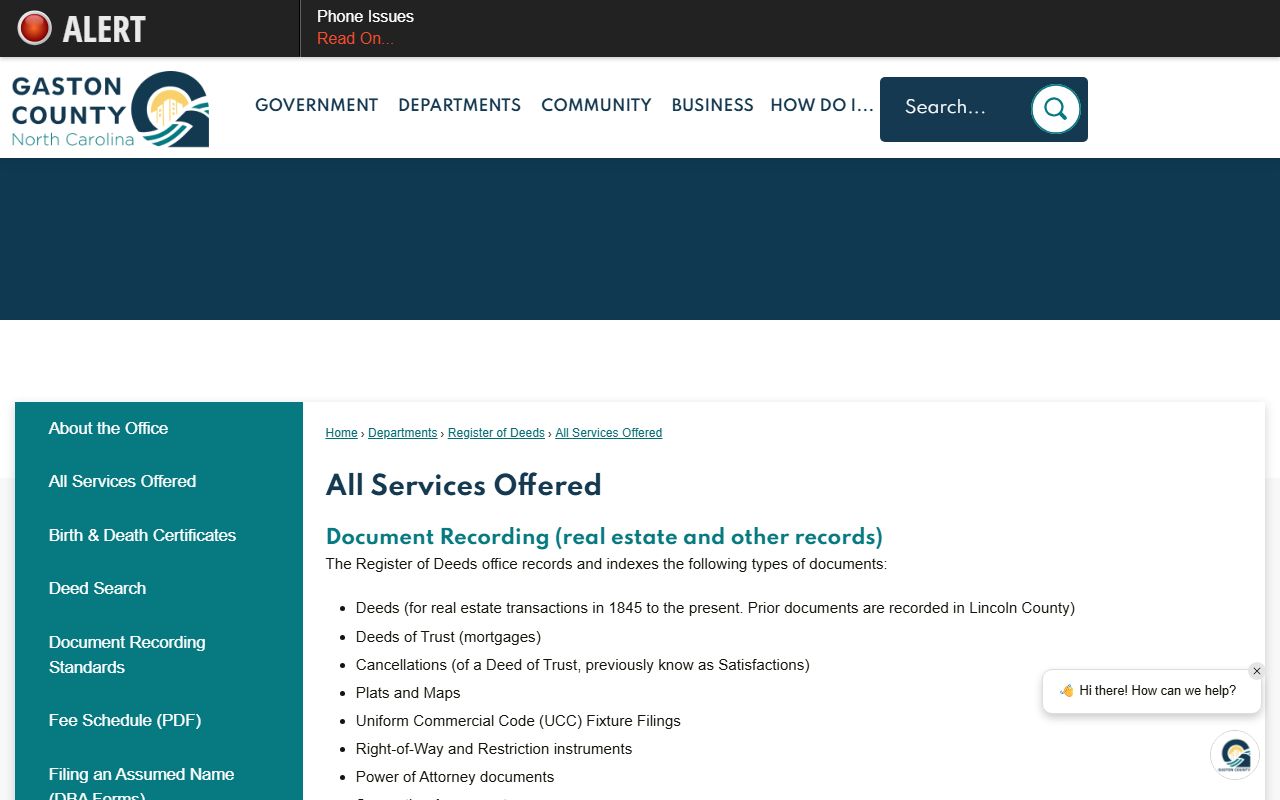
The clearest way to use the courthouse is to know which office holds which record. The clerk handles court case files, estates, special proceedings, and divorce judgments. The Register handles deeds, plats, marriage licenses, birth and death certificates, notary records, and military discharges. The Register lists its full service set, which makes the split easy to see.
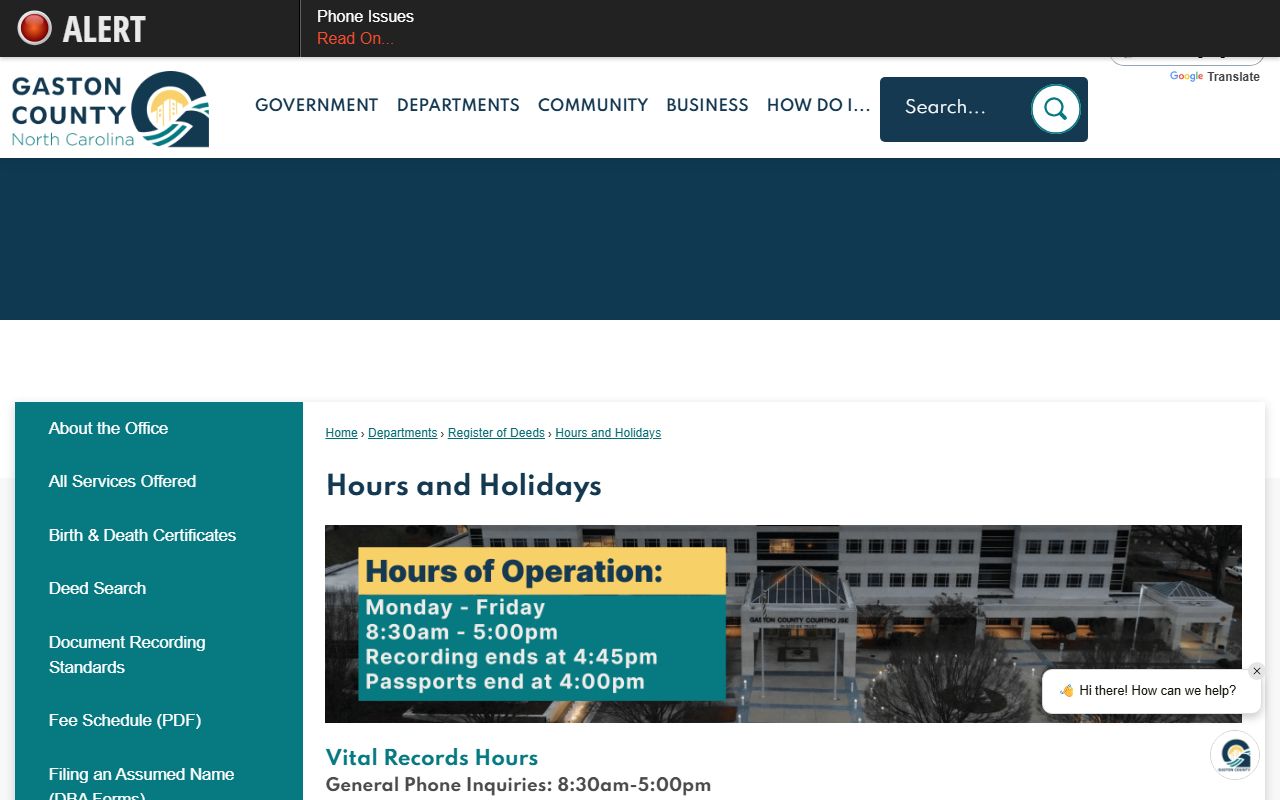
The Register also publishes detailed hours for marriage licenses, recording, notary oaths, and passports.
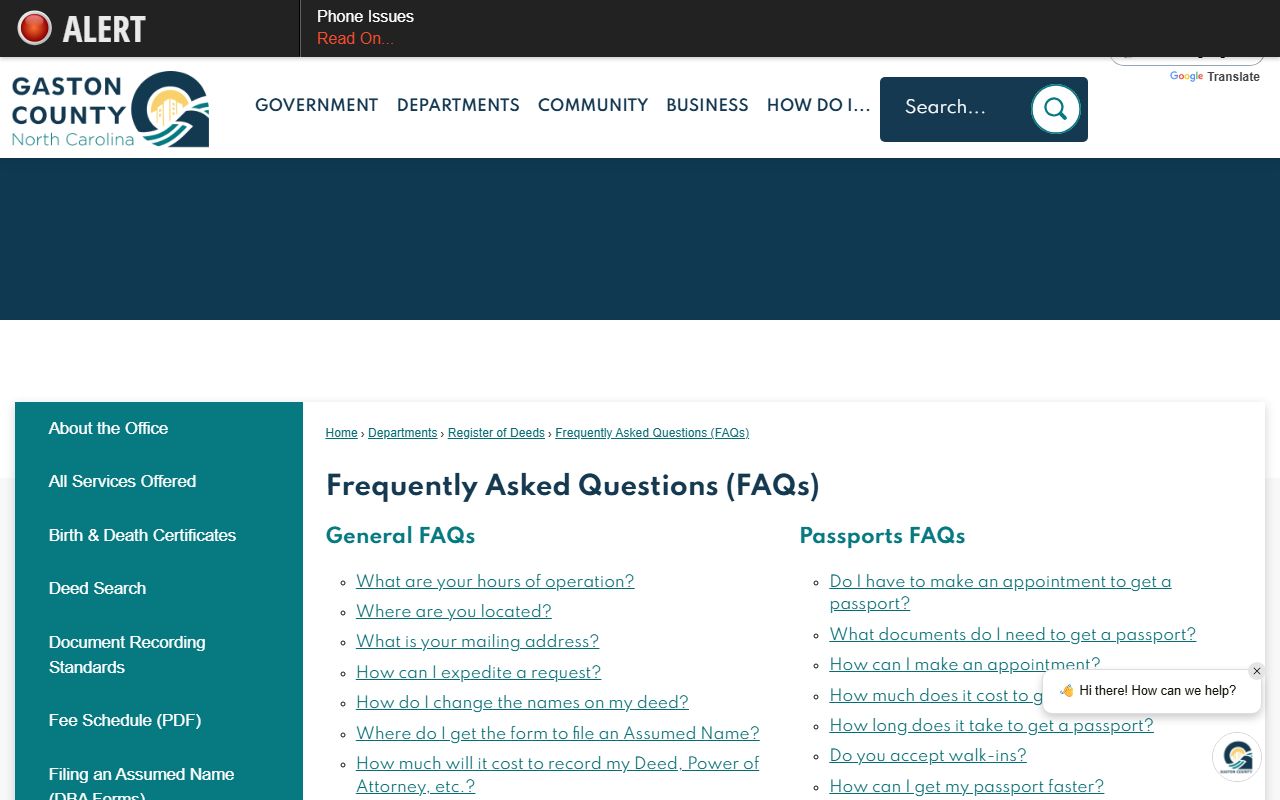
The Register FAQ adds that staff cannot perform title research and that all office information is public except some military records.
For marriage and vital records held by the Register, see marriage and divorce records.
A simple rule helps: if the record came from a court case, ask the clerk; if it came from a recorded document or a vital event, ask the Register. Title research is a good example of the limit. Register staff can show you the books and computers, but the law bars them from telling you whether a title is clear.
Requesting County and Court Records
For court case files, the clerk is the destination. For general county government records, the county runs its own service pages. The county "Get" page links public-record request and court information in one place.
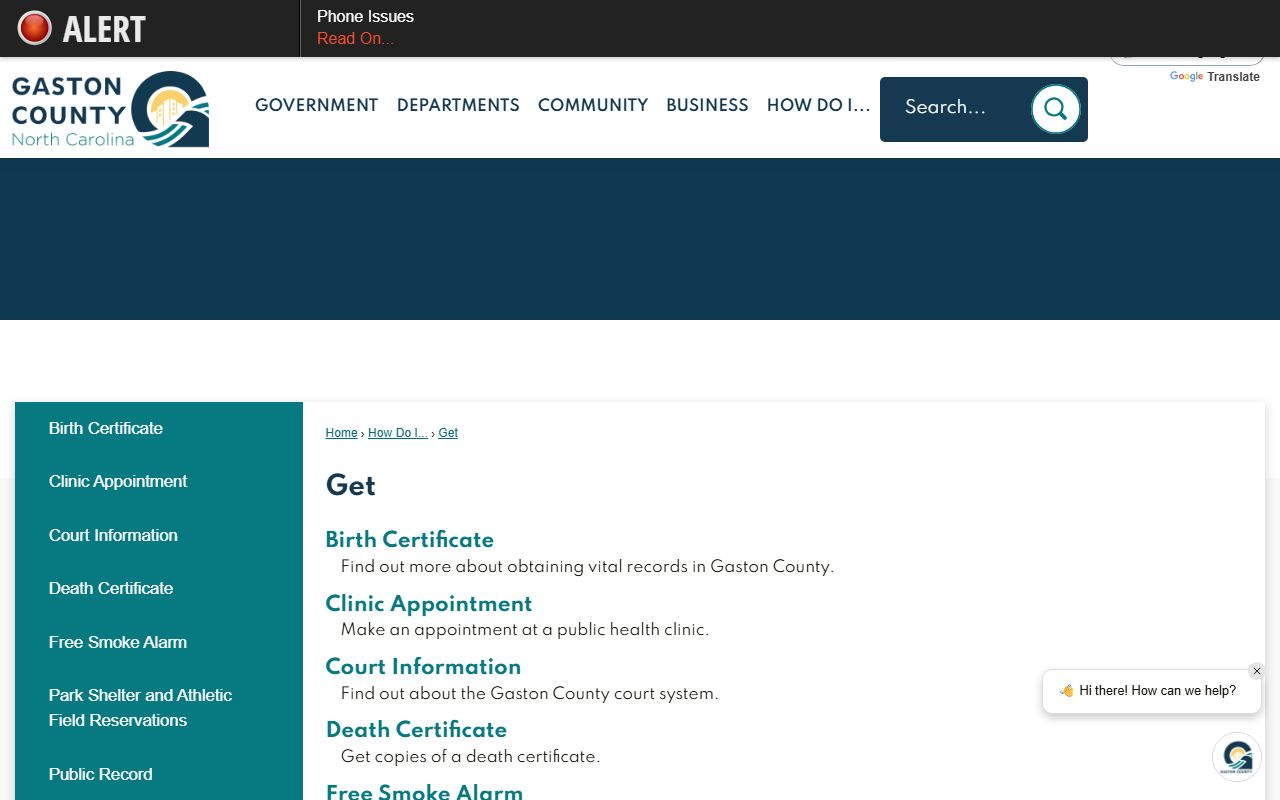
The county FAQ index also points residents to public-record request guidance.
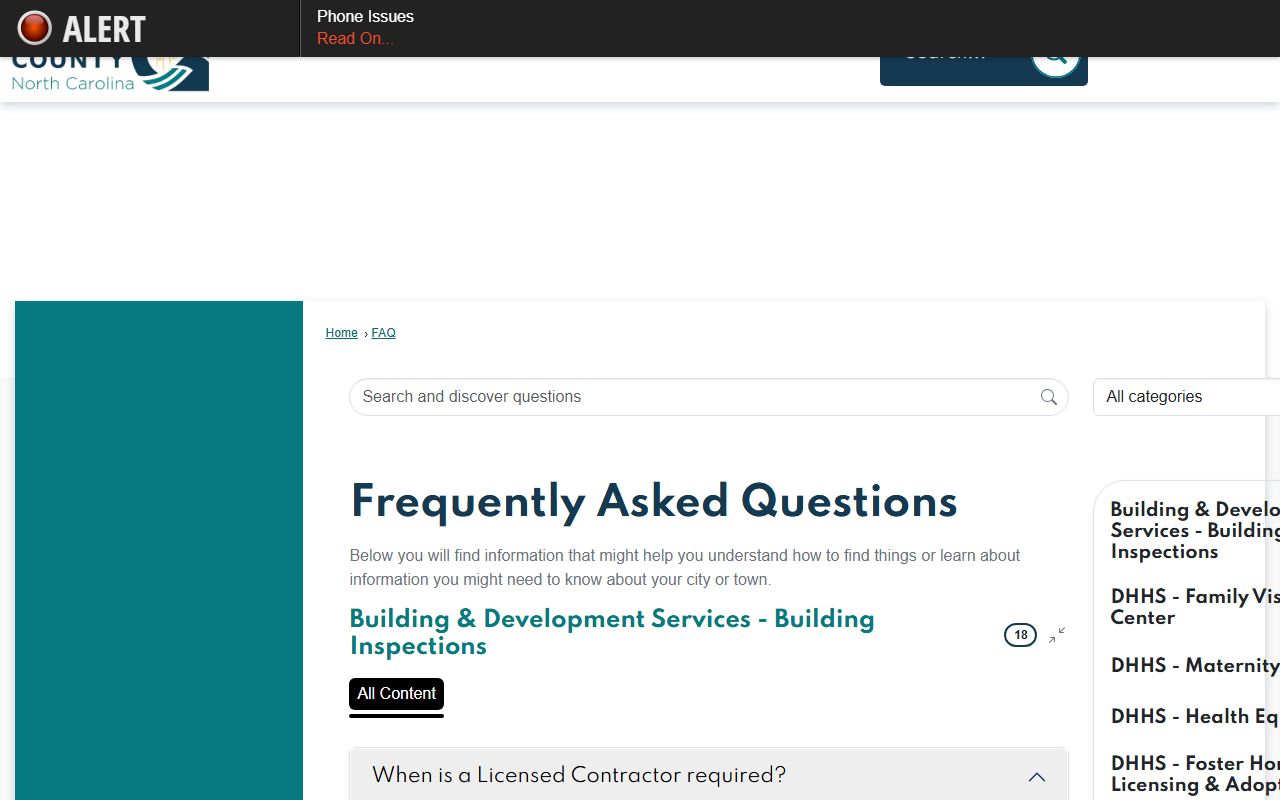
For the full public-record framework and where to file, see Gaston County public records.
Sending a request to the right office the first time saves a return trip. The clerk handles court files and estates. The Register handles deeds and vital records. The county handles general government records. When you are unsure, a quick phone call to confirm the custodian is the fastest fix.