
How to Find Recent Gaston County Arrests
The fastest way to find a recent Gaston County arrest is the Sheriff's inmate inquiry. It is a free New World Systems portal linked from the Sheriff's Office site. The search covers bookings from the current year and two years prior. You can search by last name, first name, Global Subject Number, booking number, a booking date range, or housing facility. A "Today's Bookings" button shows arrests logged that day, which is useful right after an arrest.
Before you search, have a name or a booking number ready. If you are not sure which facility holds the person, leave the housing facility set to all facilities.
- Open the inmate inquiry from the Gaston County Sheriff's Office site.
- Enter at least one field, usually a last name.
- Use "Today's Bookings" to see people booked that day.
- Open a result to view booking details and charges where shown.
- Call jail information at 704-869-6868 if the person is not listed.
A no-result search does not prove a person was never arrested, because the portal only reaches back two years. For a full roster walkthrough, see Gaston County inmate records.
What a Gaston County Arrest Record Shows
A booking entry in the inmate inquiry carries a set of standard fields. These let you confirm you have the right person and see the charges logged at intake. The exact profile layout should be checked in the live portal, but the Sheriff's own mail and search procedures confirm the core fields. The list below shows what a public Gaston County booking record typically includes.
- Full name of the person booked.
- Global Subject Number, the local inmate identifier.
- Booking number and booking date.
- Housing facility, either the Main Jail or the Annex.
- Charges logged at intake and any bond amount.
Medical, mental health, and security classification notes are not published. The Global Subject Number is the key field, because the Sheriff uses it for inmate mail and account setup, not just for search.
From Arrest to First Appearance
After an arrest, a person is taken to the Gaston County jail and booked. Booking includes a photo, fingerprints, a search, and a classification step. The person is then taken before a magistrate or judicial officer, who can set bond and conditions of release where the law allows. The Sheriff does not publish a step-by-step booking narrative, so timing varies with the charge and the caseload.
Magistrates handle initial appearances, warrants, and bond functions, and they are reachable at (704) 852-3192. Bond can be a money amount, a secured or unsecured promise, or other conditions. For urgent custody questions, jail information answers Monday through Friday, 8:00 AM to 5:00 PM, at 704-869-6868. Once a case is in court, it moves through District Court and, for felonies, on to Superior Court.
Arrest Record vs Criminal Court Record
An arrest record and a criminal court record are not the same. The arrest record is a jail booking entry held by the Sheriff. The criminal court record is the case file held by the clerk and searched through the eCourts Portal. One shows custody, the other shows the case. The comparison below lays out the difference.
| Point | Arrest Record | Criminal Court Record |
|---|---|---|
| Source | Gaston County Sheriff jail booking | Clerk of Superior Court and eCourts |
| Shows | Booking, charges at intake, custody status | Charges, pleas, disposition, sentence |
| Time range | Current year plus two years prior | Full case history once filed |
| Where to look | Inmate inquiry portal | eCourts Portal or clerk terminal |
For the full case outcome, follow an arrest into the Gaston County court records system. The booking tells you someone was arrested; the court file tells you what happened next.
Charges vs Convictions in Gaston County
This distinction matters more than any other on an arrest page. A charge is an accusation. A conviction is a finding or plea of guilt. People are often arrested and charged, then have those charges dismissed or reduced. Reading a booking as proof of guilt is a common and costly mistake.
| Point | Charge | Conviction |
|---|---|---|
| Meaning | What the state alleges | Guilt found or admitted |
| Stage | Arrest and filing | After plea or trial |
| Can change | May be dismissed or reduced | Final unless appealed or expunged |
To learn whether a charge led to a conviction, check the disposition in the court record, not the arrest log. A booking might list three charges, while the court file shows two dismissed and one reduced. Employers, landlords, and the public sometimes treat an arrest as guilt, which is both unfair and inaccurate under North Carolina law.
Mugshots and Booking Photos
A mugshot is the booking photo taken during intake. Whether a photo appears in the public inmate inquiry should be confirmed in the live portal, because the research could not run a sample search. Many North Carolina sheriff portals show a booking photo on the profile alongside the name and charges.
Be careful with third-party "mugshot" sites. They often repackage public data, charge removal fees, and keep outdated entries online. Use the official Sheriff inmate inquiry instead, and remember that a booking photo does not show how a case ended.
If a charge is later dismissed or expunged, the official record can be cleared, but a copy posted on a private site may linger. That gap is one reason North Carolina built an expunction process. The safest practice is to rely on the Sheriff and court records, then verify a current status by phone if it matters.
Sealed vs Expunged Records
People often use these words as if they mean the same thing. They do not. A sealed record is closed to ordinary public view but still exists. An expunged record is sealed or destroyed under statute, as if the matter was removed. North Carolina uses both "expunction" and "expungement" for the same process.
| Point | Sealed | Expunged |
|---|---|---|
| Status | Closed to public, record remains | Sealed or destroyed under statute |
| Authority | Court order or statute | Expunction order by a judge |
| Later access | Limited, by authorized parties | Generally none after destruction |
An expunction petition is filed with the clerk in the county of charge or conviction under statutes such as G.S. 15A-145.5 or G.S. 15A-146. The general filing fee is $175, with no fee for some dismissed or not-guilty cases. After a judge signs the order, G.S. 15A-151 limits later access.
State Criminal Records and DAC
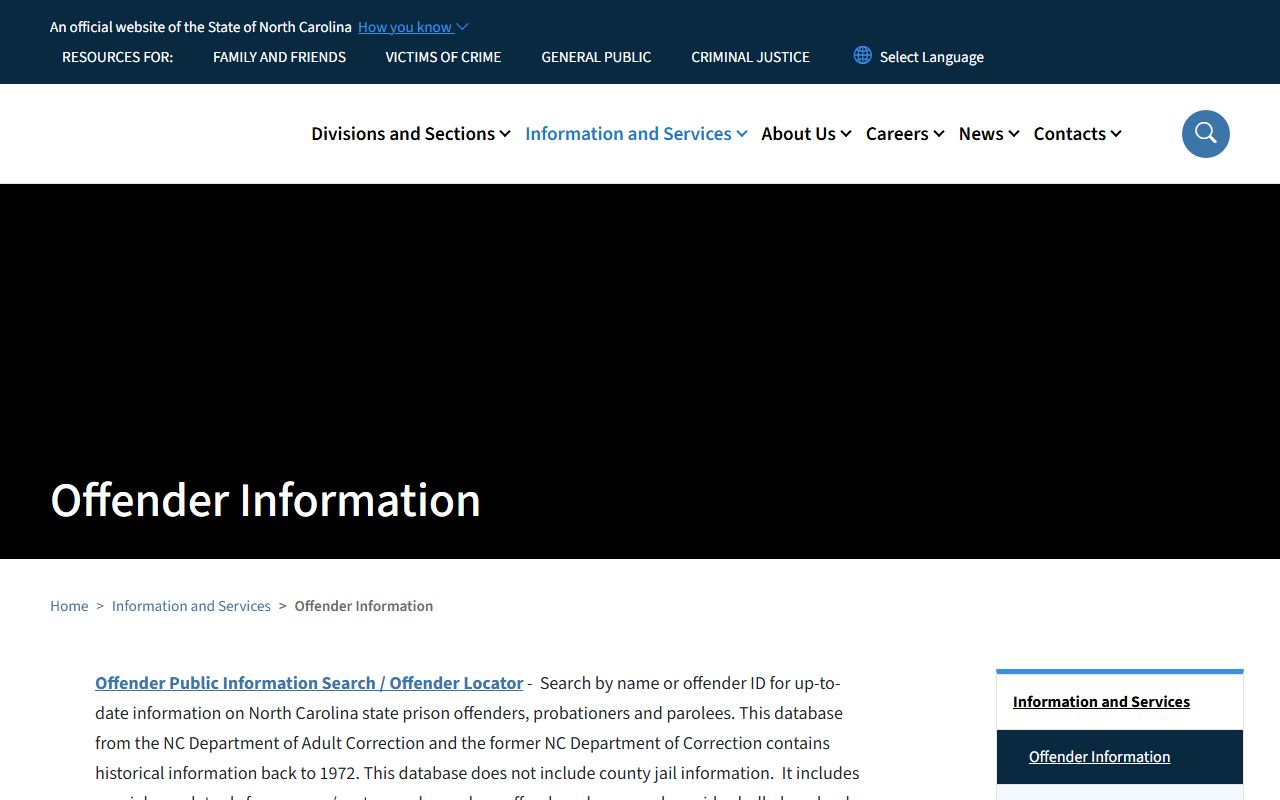
The Sheriff inmate inquiry covers the county jail. It does not cover state prison. For someone sentenced to state prison, on probation, or on parole, use the North Carolina Department of Adult Correction offender search. It includes current offenders and historical data back to 1972, but it does not include county jail information.
The DAC offender-search page describes its tools, shown below.
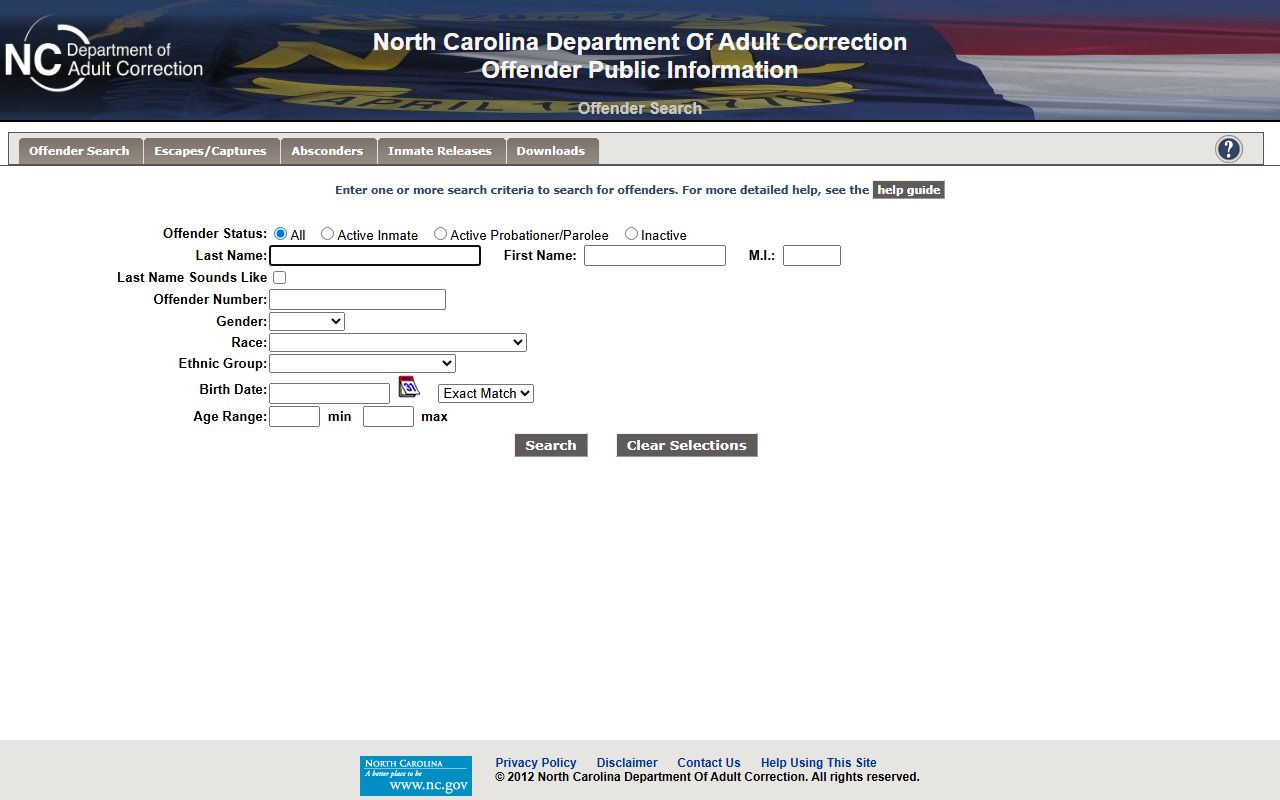
You can search the DAC offender public information system by name or offender ID, as the entry screen shows.
A person arrested last night in Gastonia will usually appear, if public, in the Sheriff inmate inquiry, not in DAC. DAC matters after state prison admission or supervision.
Sex Offender Registry
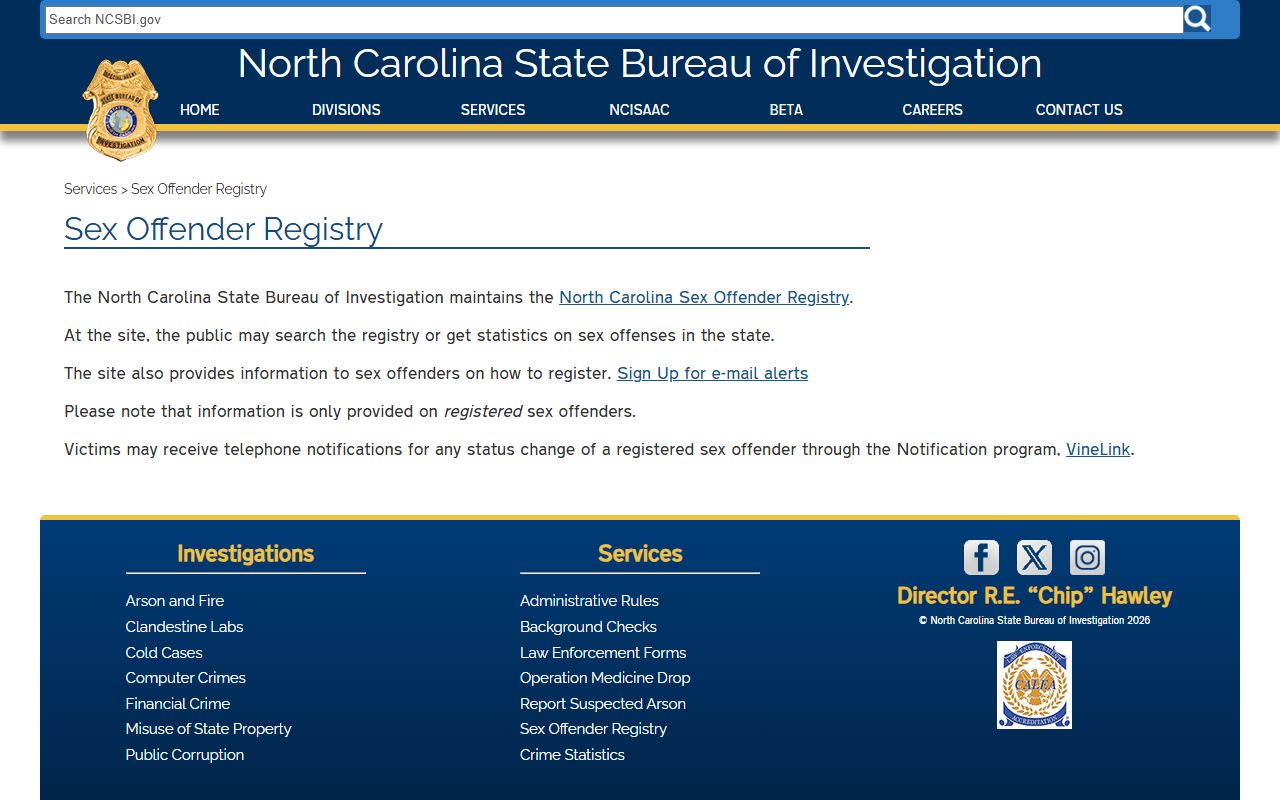
The North Carolina SBI maintains the statewide Sex Offender Registry. The public can search it by name or location and can sign up for email alerts. It lists only registered offenders, and registry status is not the same as current custody or a pending case. A person can be on the registry and not in jail.
The SBI overview explains how the registry works.
The registry search page itself lets you look up offenders by name or address.
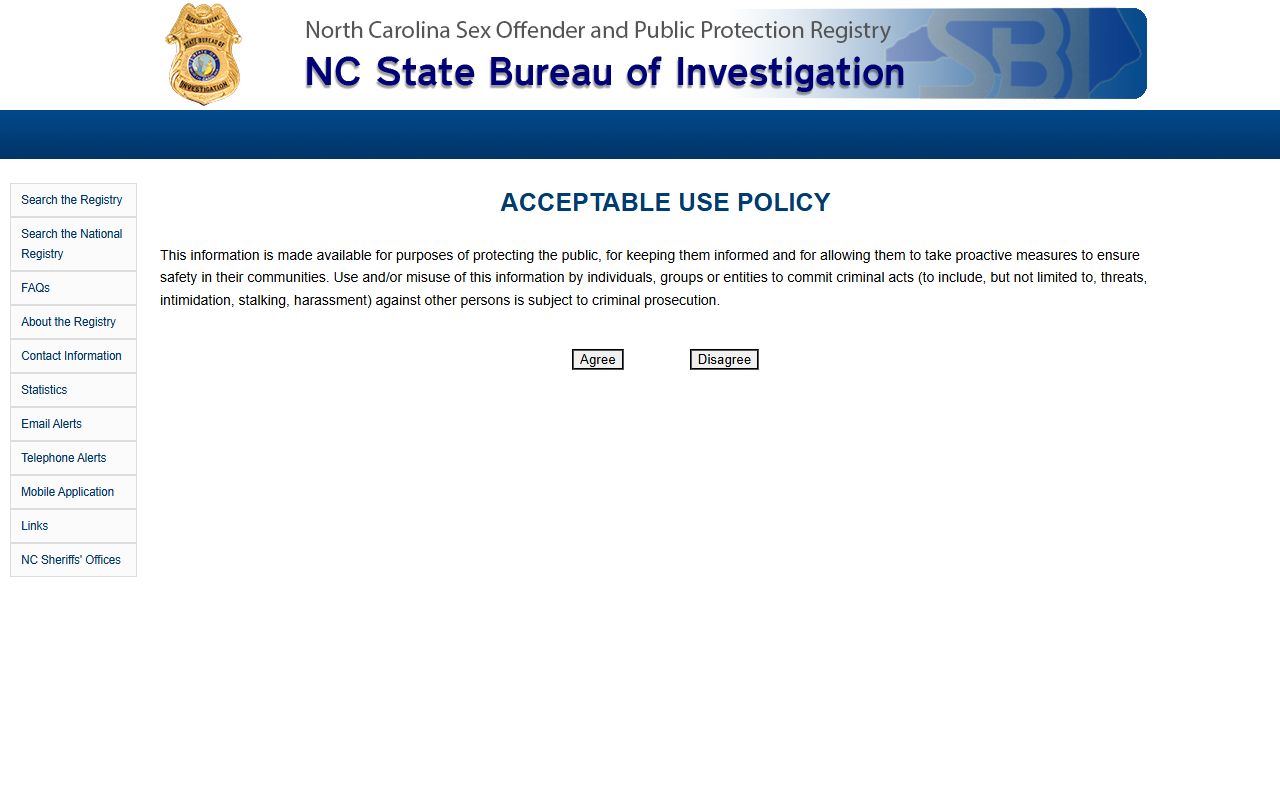
Treat the registry as a status tool, separate from arrest, custody, or court records.
District Attorney and Public Defender
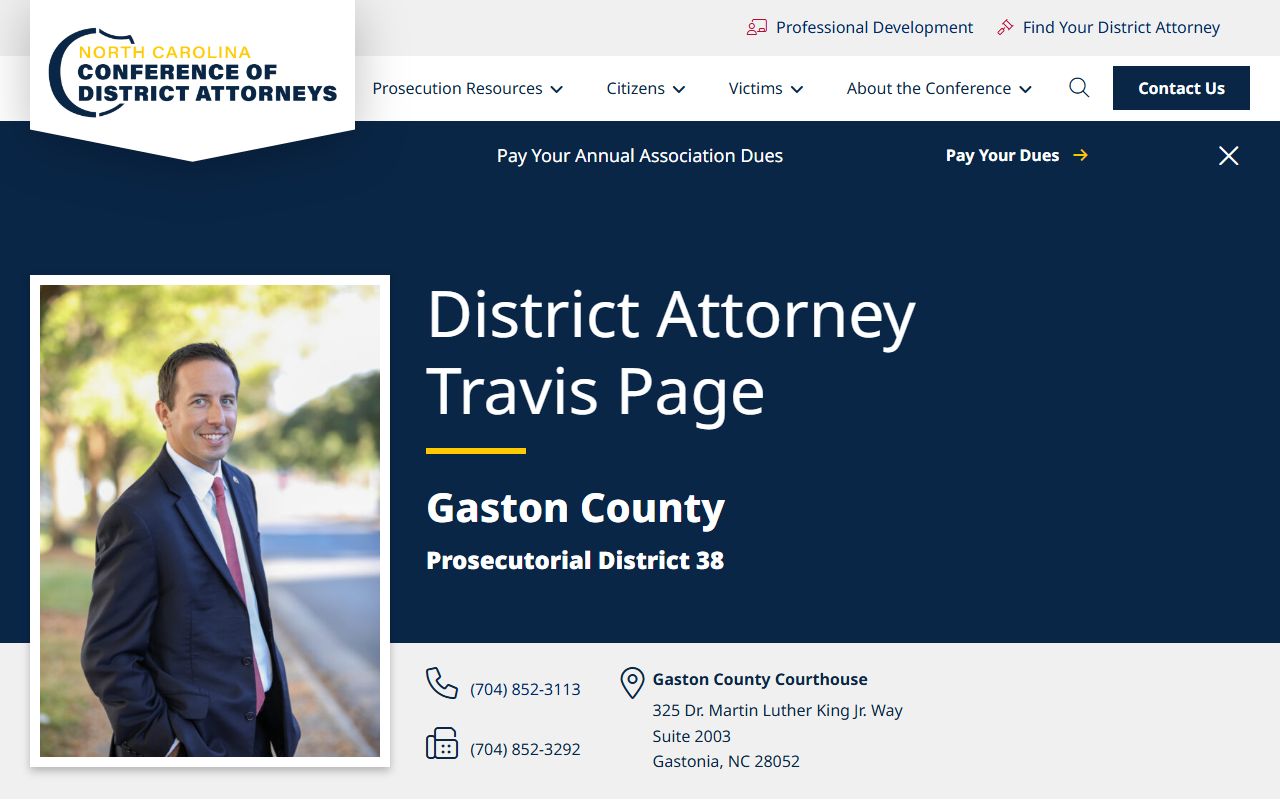
Criminal cases in Gaston County are prosecuted by the District Attorney for Prosecutorial District 38, Travis Page. The office prepares the criminal trial docket, advises law enforcement, and represents the state in court. The DA is at the Gaston County Courthouse, Suite 2003, phone (704) 852-3113.
The official Prosecutorial District 38 page describes the office and its victim-support work, including a National Day of Remembrance for Murder Victims event with Hope United.
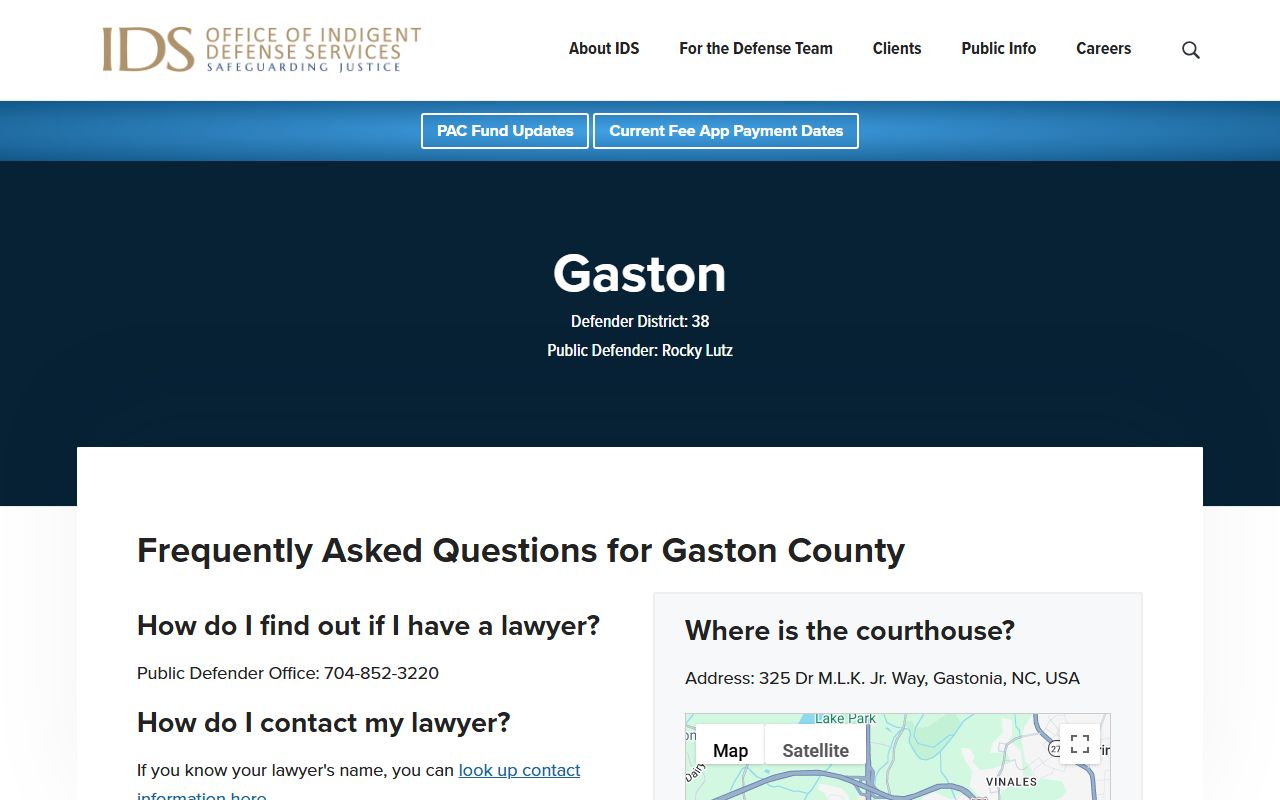
People who cannot afford a lawyer may qualify for the Public Defender, Defender District 38, led by Rocky Lutz at 704-852-3220. The North Carolina Indigent Defense Services page covers Gaston representation.
The DA represents the state, while the public defender represents eligible defendants. They are separate offices with opposite roles.
Juvenile and Restricted Arrest Records
Juvenile records are generally confidential under G.S. 7B-3000. A public arrest page should not suggest that juvenile matters can be browsed like adult bookings. Juvenile expunction is handled differently under G.S. 7B-3200. Some juvenile information can be used by authorized justice agencies, but that is not ordinary public access.
Sealed warrants, investigative materials, and certain victim details may also be withheld. If a record you expect is missing, it may be confidential by statute rather than simply unavailable.
Police reports follow their own rules too. You request a report from the law-enforcement agency involved, but the Judicial Branch warns that a complete report may not be public unless criminal discovery rules require it. Do not assume every arrest comes with a public narrative report.
Background Checks and Related Searches
An arrest search is not a background check. For a formal check, the Judicial Branch directs users to the clerk's office rather than the online Portal. Keep arrest, charge, conviction, and custody status separate, because each lives in a different system.
For active warrants, see Gaston County warrant records. For DUI and DWI cases, which route through criminal court, see traffic court records. For the full case file behind an arrest, use court records.