
North Carolina Public Records Law Basics
The core of public access in North Carolina is Chapter 132. It defines public records broadly and gives the public a right to inspect and copy them. The law applies to state and local agencies, which includes Gaston County offices. The federal FOIA does not govern county records here, so requests follow the state statute instead.
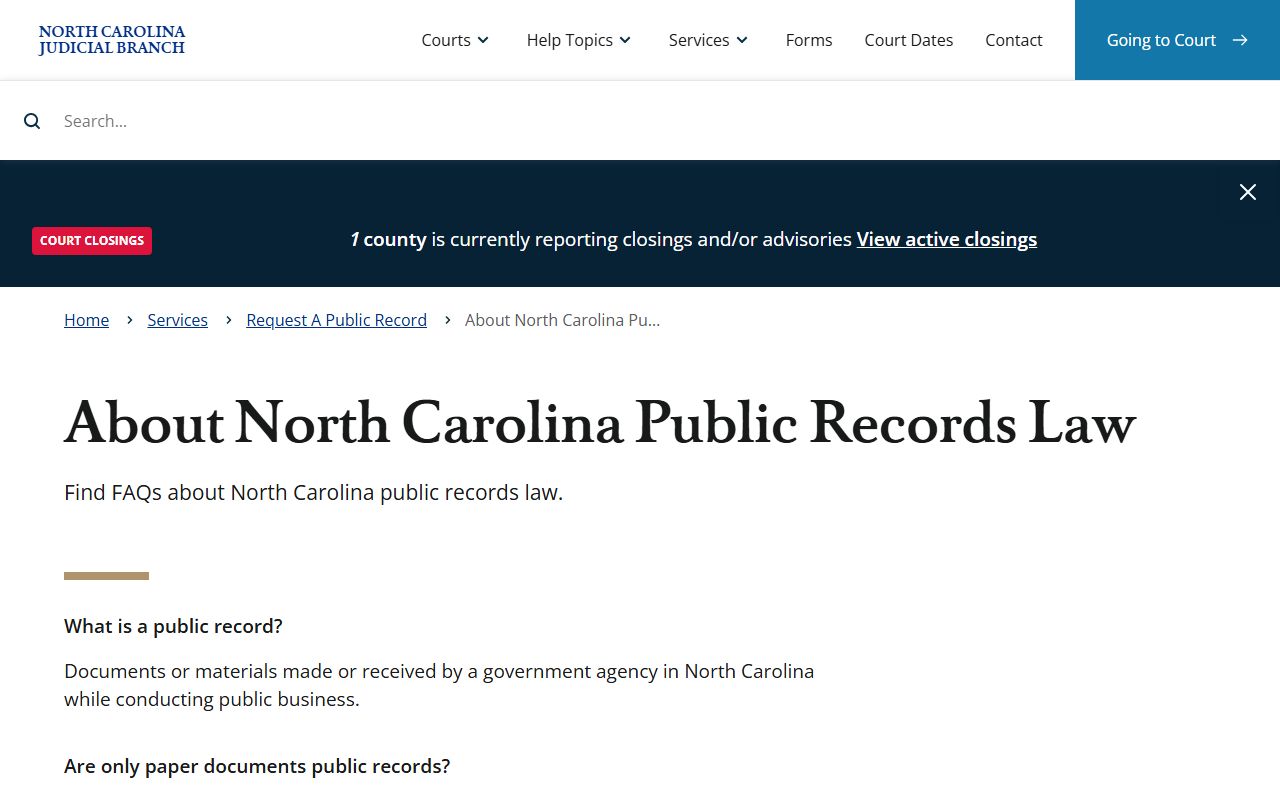
The Judicial Branch explains how the public records law applies to court-related records.
Chapter 132 itself is published by the General Assembly and sets the framework for every request below.
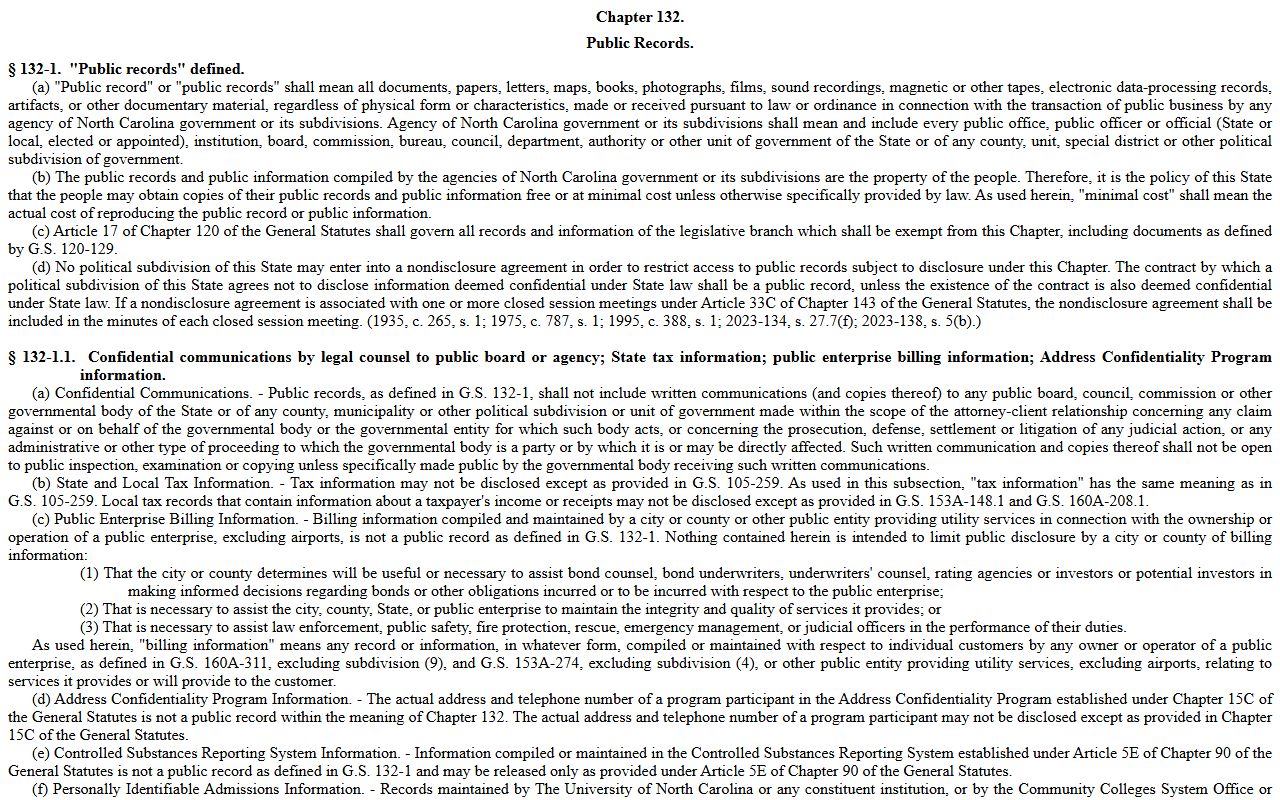
The chapter starts with the definition of a public record and moves through inspection rights and fees. The general rule is openness. A custodian can withhold a record only when a specific statute makes it confidential. That balance, broad access with named exceptions, runs through every part of the law.
Because the rule favors access, you do not need a special reason to ask for most records. A resident, a journalist, a business, or anyone else can request public records on equal terms. That open-by-default approach is a key feature of the North Carolina framework.
What Counts as a Gaston County Public Record
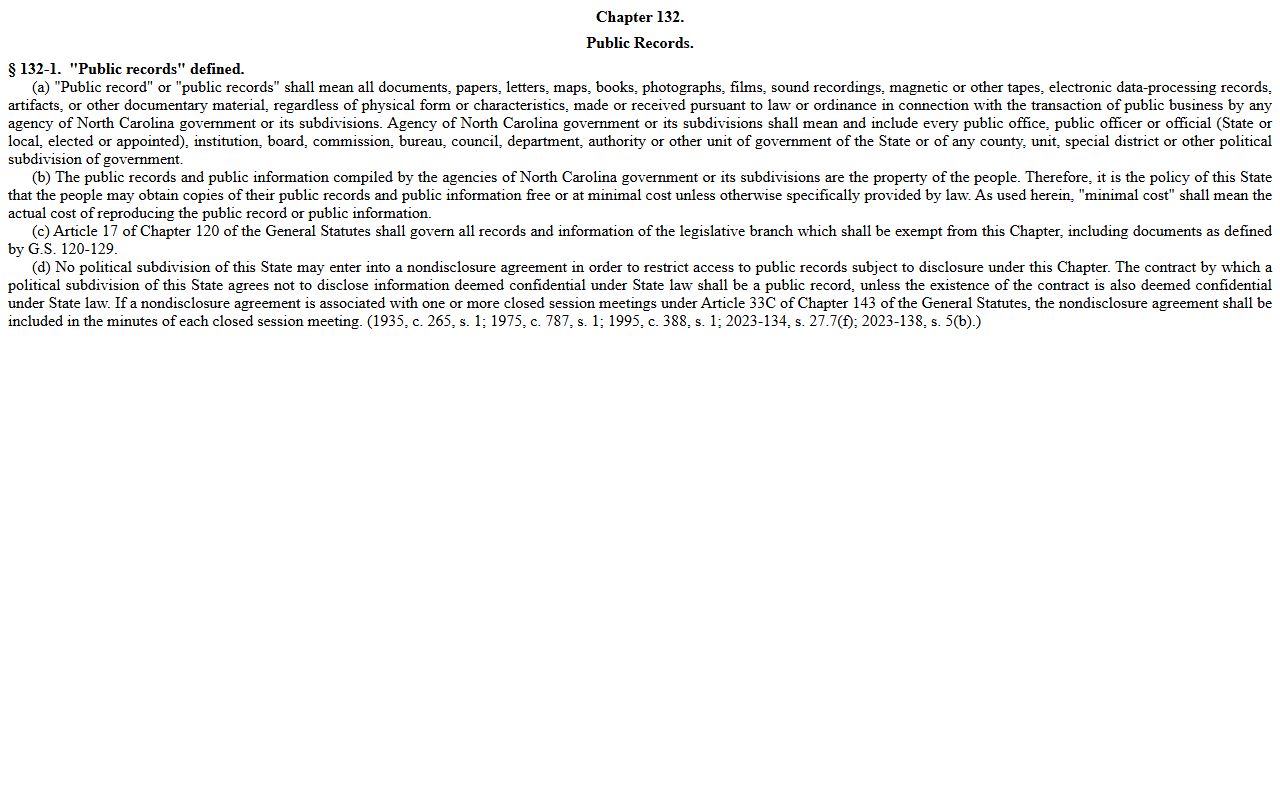
G.S. 132-1 defines public records as documentary materials made or received in connection with public business by a state or local agency. That broad definition is why so many county documents are open. It covers county government records, Register of Deeds records, and many court-related materials.
The definition statute is the starting point for any request.
The Register of Deeds, for example, says all information in its office is public record except some military records. That includes deeds, plats, marriage licenses, and birth and death indexes. County government records, such as budgets, meeting materials, and contracts, also fall under the law when they document public business.
What the definition does not do is force an agency to create a record that does not exist. The law covers documents already made or received, not answers to general questions. Framing a request around an actual document gets a faster, cleaner response.
How to File a Public Records Request
Filing a request is usually straightforward. You identify the record, ask the office that holds it, and pay any copy cost. You do not have to explain why you want most records. The steps below outline the process for a Gaston County request.
- Identify the record and which office holds it.
- For county government records, use the county "Get" service page or FAQ.
- For Judicial Branch administrative records, use the Request a Public Record page.
- For court case files, ask the Clerk of Superior Court.
- Ask for inspection or copies and confirm the fee before you proceed.
- Keep your request and any receipt in case you need to follow up.
The county also runs an online service hub and an FAQ index that point residents to public-record request guidance and court information. Those pages are a good first stop for county government records that are not court files.
For court case files specifically, see Gaston County court records and the Clerk of Superior Court page, since those are not handled like ordinary county records.
Inspection Rights and Response
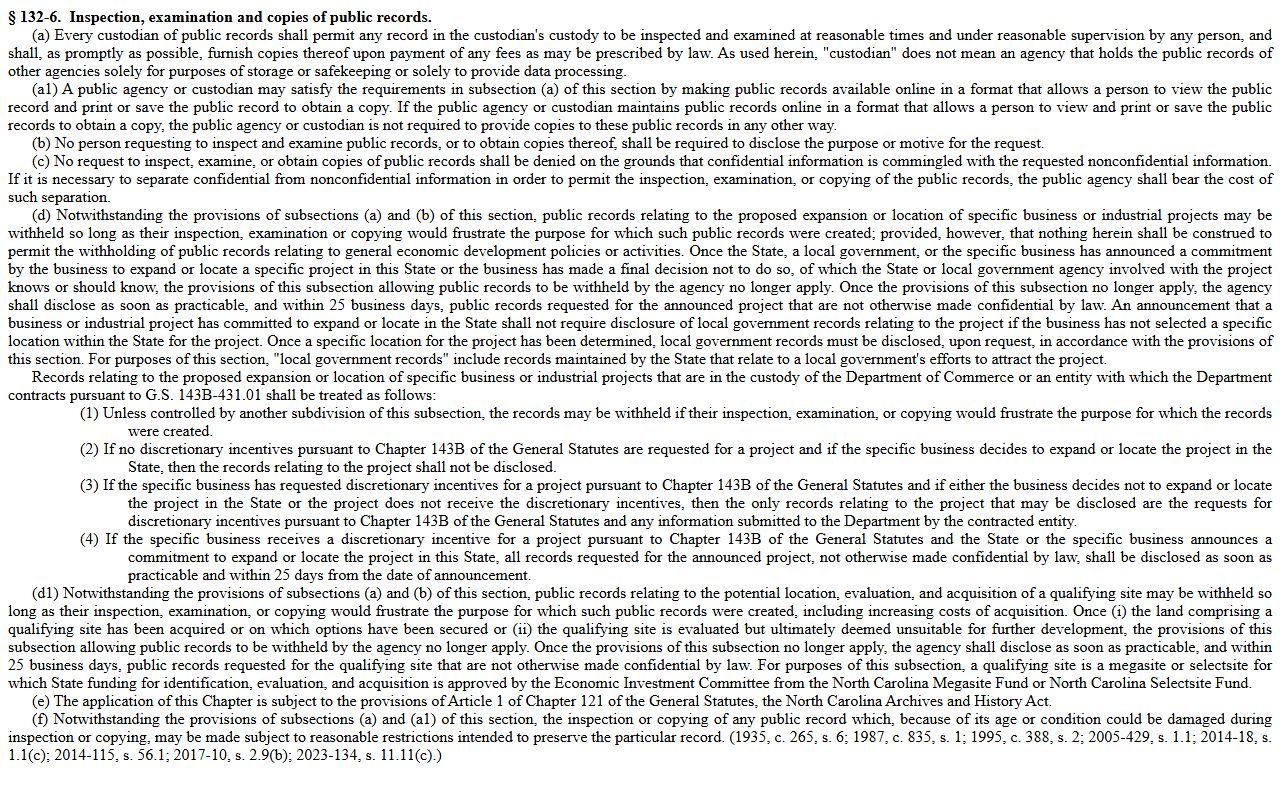
G.S. 132-6 requires custodians to allow inspection and examination of public records at reasonable times and under reasonable supervision. It is the basic access mechanism for county records. A custodian must provide copies as well, subject to the fee rules.
The inspection statute lays out the right to examine records.
If access is denied, you can ask which statute or rule supports the denial, and you may seek review, counsel, or court action. The law does not set a single fixed deadline for every response, but it requires access within a reasonable time. A simple request often gets a quick answer, while a broad one can take longer to gather and review.
Being specific helps. Naming the document, a date range, and the office speeds the search and lowers the cost. A vague request that asks for everything on a topic can be slow and expensive to fill.
Public Records Fees and Actual Cost
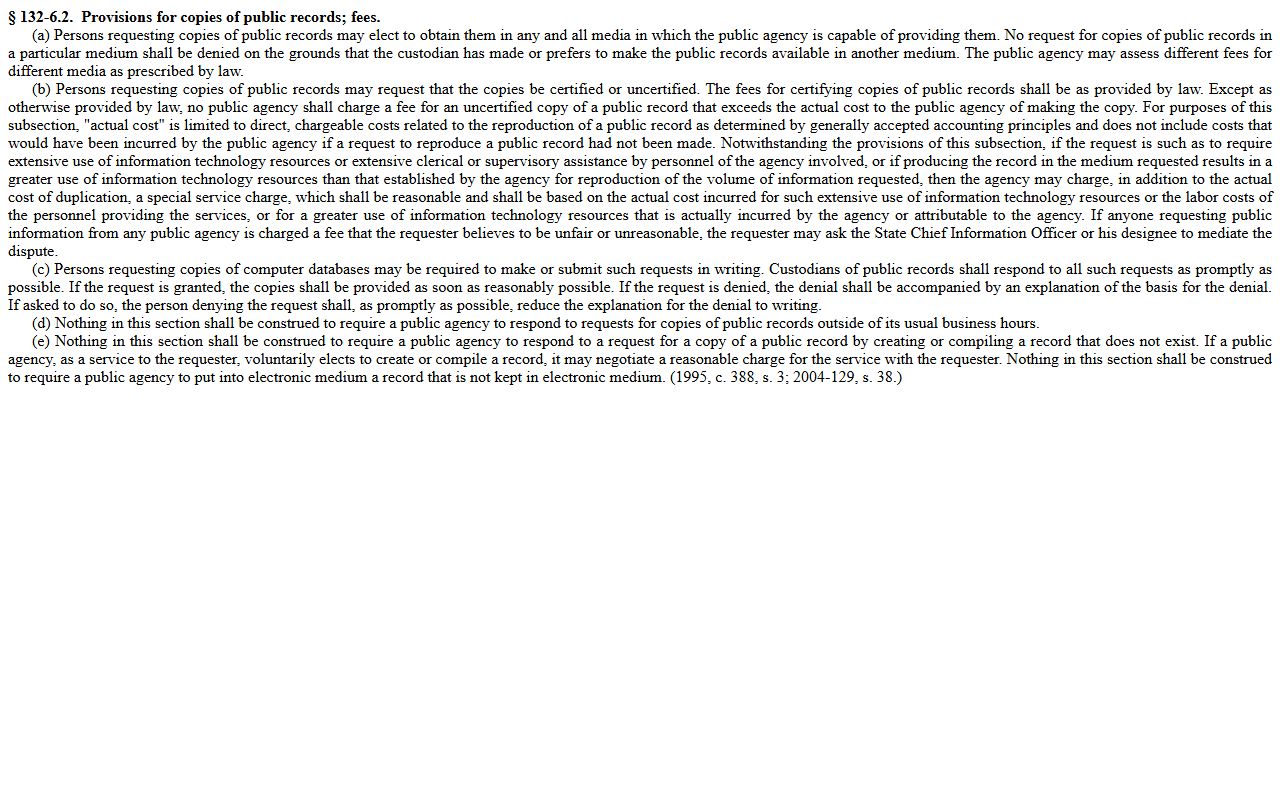
G.S. 132-6.2 generally limits fees to the actual cost of reproduction unless another law sets a specific fee. That keeps copy charges reasonable for most requests. Some offices, like the Register of Deeds, work from a published fee schedule set by other law. The table below shows the general fee framework.
| Item | Fee Basis |
|---|---|
| Ordinary public record copies | Actual cost of reproduction under G.S. 132-6.2 |
| Register of Deeds copies | Published Register fee schedule |
| Court case copies | Clerk copy and certification fees |
| Special or extensive requests | May carry additional cost as allowed by law |
The fee statute caps most charges at actual cost, as the text confirms.
Ask for a cost estimate up front when a request is large, so there are no surprises.
Redaction Requests for Personal Information
G.S. 132-1.10 protects personal identifying information and lets people ask to remove certain identifiers from online images of official records held by a register of deeds or clerk. The Gaston County redaction form cites this statute. It is narrow: it targets identifiers like Social Security numbers, not whole documents.
The redaction request form asks for specific information, shown in the inventory below.
| Field Label | Type | Required | Notes / Format |
|---|---|---|---|
| Name of requestor | Text | Yes | The person asking for redaction. |
| County | Text | Yes | Register of Deeds of the county. |
| Information to remove | Checkbox / Text | Yes if applicable | SSN, license, account, card, PIN, passwords. |
| Exact document location | Text | Yes | Document type, book, page, and document number. |
| Signature and printed name | Signature / Text | Yes | Must be signed by the requestor. |
| Delivered by | Checkbox | Yes | Mail, fax, or in person. |
The statute behind the redaction form is published online.
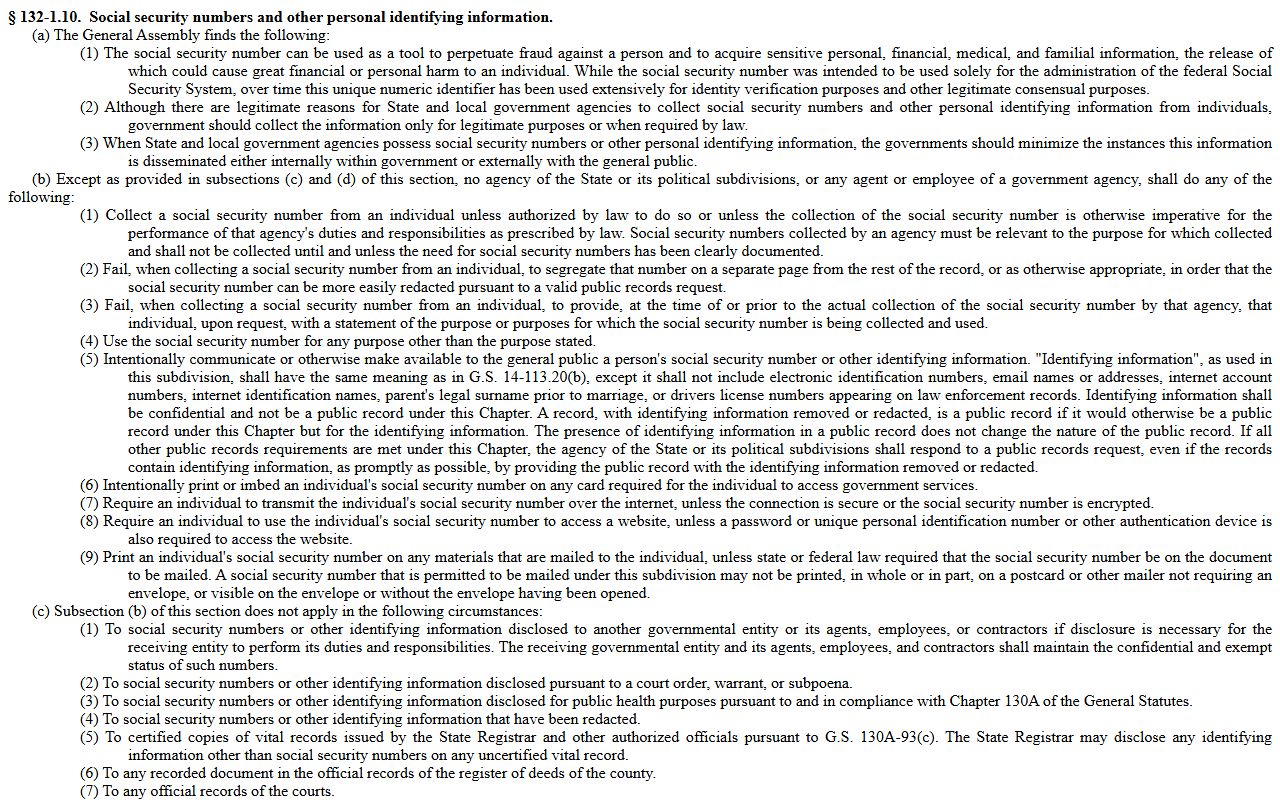
The form warns that requesting redaction without proper authority can be an infraction with a fine up to $500 per violation.
Court Records vs County Records
Not every public record follows the same path. County government and Register of Deeds records run under Chapter 132 through those offices. Court case files have additional Judicial Branch procedures and confidentiality rules on top of the general law. So a deed request and a court file request go to different places.
Police reports are another special case. You request a report from the law-enforcement agency involved, but the Judicial Branch warns a complete report may not be public unless criminal discovery rules require it. Match the record to the right office and the right rule.
This split surprises many requesters. The same courthouse holds court files at the clerk and deeds at the Register, yet each follows its own process. Sending a request to the wrong office wastes time, so confirm who the custodian is before you ask.
Confidential Exceptions
Some records, or parts of records, are closed by specific statute even though the general rule favors access. Juvenile records are confidential under G.S. 7B-3000. Adoption files are protected under G.S. 48-9-102. Mental health and commitment records are restricted under G.S. 122C-54. Expunged records are sealed under G.S. 15A-151.
Note: A Gaston County record that is normally public can still be withheld in part if a specific statute makes that information confidential.
Where to File Your Request
The right destination depends on the record. County government records go through the county's public-record request channels. Register records go to the Register of Deeds. Court case files go to the Clerk of Superior Court. Judicial Branch administrative records use the state Request a Public Record page.
When in doubt, call the office first and describe what you need. Staff can confirm whether they hold the record and explain their request method. A short call up front often prevents a misdirected request and a second wait.
The Register of Deeds is worth a special mention, because so many county requests land there. It holds deeds back to 1845, plats, deeds of trust, powers of attorney, separation agreements, notary registrations, and military discharge records, along with marriage licenses and birth and death indexes. The office keeps paper records in vaults and digital copies on secure courthouse servers, and it serves as a U.S. Passport Application Acceptance Facility.
One limit catches people off guard. Register staff cannot perform title research or check liens, because the law bars employees from doing that work. They can show you the books and computers, but they cannot tell you whether a title is clear or what a recorded instrument means. For that kind of analysis, you need an attorney or a title professional.
For related guidance, see Gaston County court records, the Clerk of Superior Court page, and marriage and divorce records for Register-held vital records.