
Searching Gaston County Court Records
How do I search Gaston County court records?
Use the official North Carolina eCourts Portal for online case information, then use the Clerk of Superior Court for official copies and paper files. The Judicial Branch also says criminal, civil, special proceeding, and estate case information can be reached at public self-service terminals in clerk offices. Start at the official Gaston County Judicial Branch page rather than a third-party site. Have a case number or a full party name ready before you search. See Gaston County court records for the full walkthrough.
Is eCourts available in Gaston County?
Yes. North Carolina completed its eCourts rollout in all 100 counties on October 13, 2025, and every county now uses Enterprise Justice, also called Odyssey. For Gaston County, that means case search and payment content runs through the official Portal and the clerk's office, not older legacy systems. If you find old references to a separate county system, the current route is the statewide Portal. More detail is on the court dockets page.
Can I get a criminal background check from the Portal?
No. The Judicial Branch says people performing background checks should use the county clerk's office, not the Portal. The Portal helps you find case information, but a formal background check should go through the clerk's process or the statewide criminal background-check route. The state also runs a licensed Remote Public Access program for bulk data. See court records for the difference.
Courthouse and Clerk Questions
Where is the Gaston County Courthouse?
The official address is 325 Dr. Martin Luther King Jr. Way, Suite 1004, Gastonia, NC 28052. The main phone is (704) 852-3100. The courthouse holds the Clerk of Superior Court, Superior and District Court, the District Attorney, and magistrate functions. The Register of Deeds is on the first floor. See the Clerk of Superior Court page for contacts and request methods.
What are the courthouse hours?
The Judicial Branch courthouse page lists Monday through Friday, 8:30 AM to 5:00 PM, and closed on weekends. Verify closures before traveling, especially around state holidays or weather events. The Register of Deeds publishes narrower service windows for marriage licenses, recording, and passports. For visit details, see the home page directions section.
Are cell phones allowed in the courtrooms?
Electronic devices are barred from Gaston County courtrooms by judicial order effective July 1, 2023. Cell phones are allowed on the first floor where the Register of Deeds office sits. If you have business in other parts of the courthouse, leave devices at home or in your vehicle. The split is covered on the marriage and divorce records page.
Marriage, Divorce, and Estate Questions
Where do I get a marriage license?
Marriage licenses are issued by the Gaston County Register of Deeds on the first floor of the courthouse, not by the clerk. Marriage license service runs from 9:00 AM to 11:00 AM and 2:00 PM to 4:30 PM, with appointments preferred. The license fee is $60 and a certified copy is $10. See marriage and divorce records for the application and fees.
How do I get a copy of a divorce judgment?
The Judicial Branch says a divorce judgment comes from the clerk of court in the county where the divorce was granted. In Gaston County, that is the Clerk of Superior Court. A divorce judgment is different from a divorce certificate, which comes from North Carolina Vital Records. Bring party names and an approximate date. The marriage and divorce records page explains all three paths.
How does probate work in Gaston County?
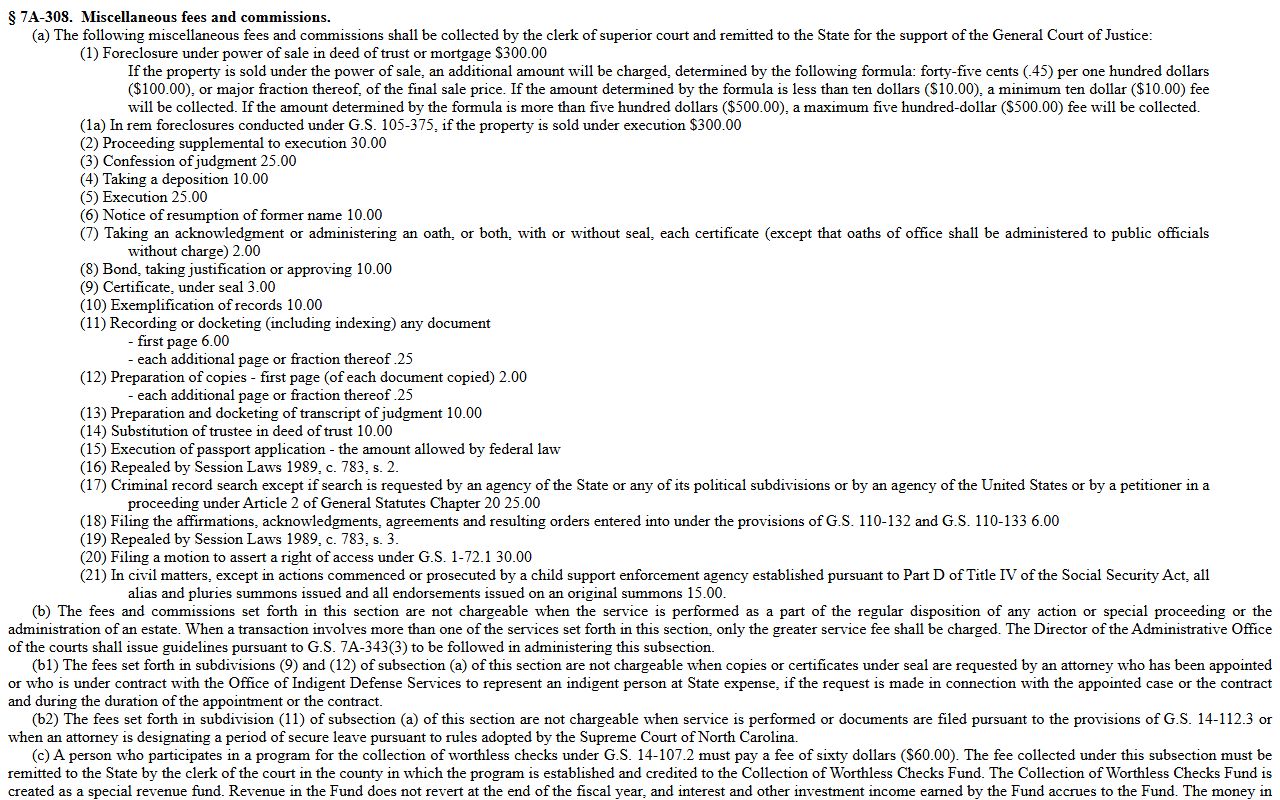
North Carolina does not have a separate probate court. Estates run through the Estates Division of the Clerk of Superior Court, which admits wills and issues letters to a personal representative. Estate costs follow G.S. 7A-307. Civil action costs follow G.S. 7A-308, shown below. The probate records page covers the estate process.
Inmate and Arrest Questions
How do I search for a Gaston County inmate?
Use the official New World inmate inquiry linked by the Sheriff. Search fields include Last Name, First Name, Global Subject Number, Booking Number, a booking date range, and Housing Facility. The dropdown lists the Main Jail and the Jail Annex. The search only includes bookings from the current year and two years prior. A "Today's Bookings" button shows people booked that day, which helps right after an arrest. See Gaston County inmate records for the full guide.
How far back does the inmate search go?
The official inmate inquiry footer says the search only includes bookings from the current year and two years prior. For older arrests or people released outside that window, contact the Sheriff or use court records if the arrest produced a case. A no-result search does not prove a person was never booked. The released inmates page covers verification options.
Where are state and federal inmate records?
For state prison offenders, probationers, and parolees, use the North Carolina Department of Adult Correction offender search, which includes historical data back to 1972 but not county jail records. For federal inmates from 1982 to the present, use the BOP Inmate Locator. Both are separate from the county jail. See released inmates for links and details.
Confidential Records and Expunction
How do I expunge a record?
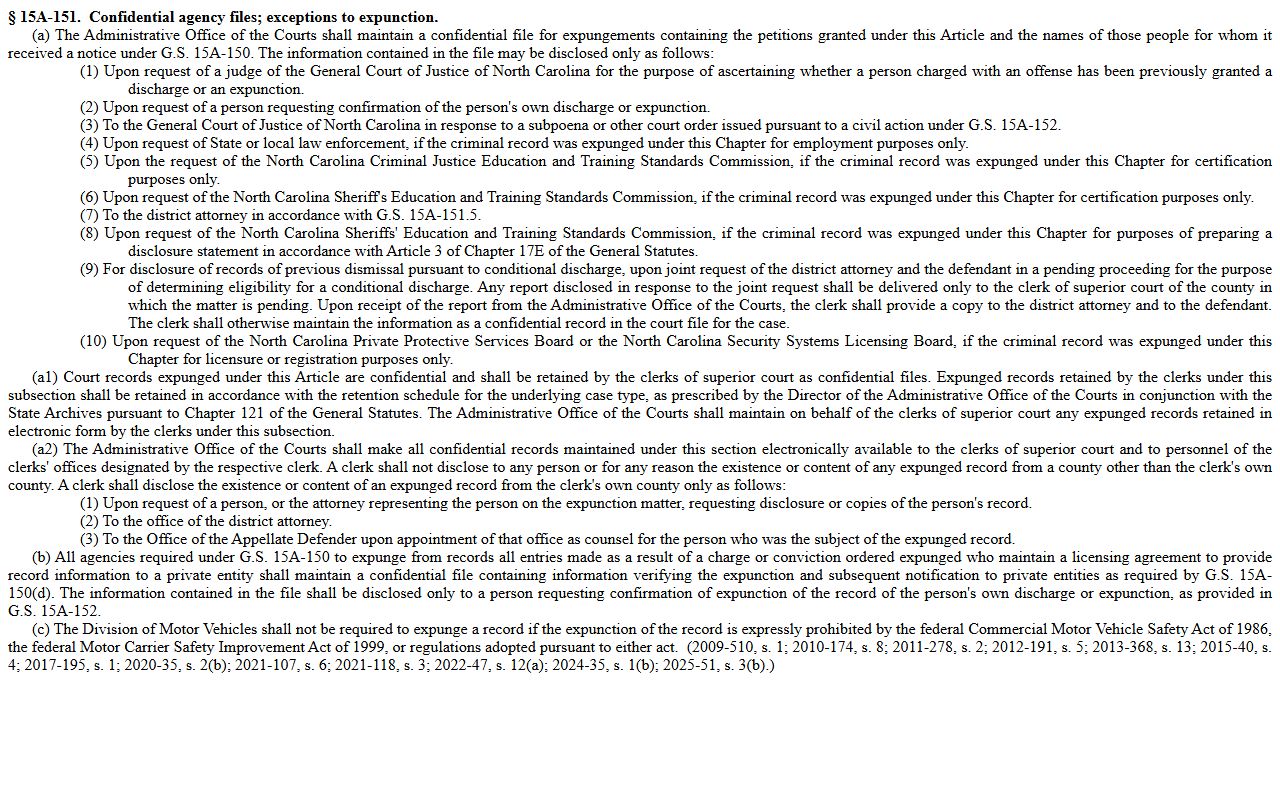
Use the Judicial Branch expunction help topic and file the proper petition with the clerk in the county where you were charged or convicted. The general filing fee is $175, with exceptions for some dismissed or not-guilty cases. After a judge signs the order, access is limited under G.S. 15A-151, shown below. The process can take several months and may require a hearing. The arrest records page covers sealed and expunged records.
Are juvenile records public?
Generally no. North Carolina juvenile records are confidential under G.S. 7B-3000, with limited exceptions for authorized agencies. Juvenile expunction is handled differently from adult expunction. A public records page should not suggest juvenile cases can be browsed like adult ones. The public records page lists the main confidentiality statutes.
Are adoption records public?
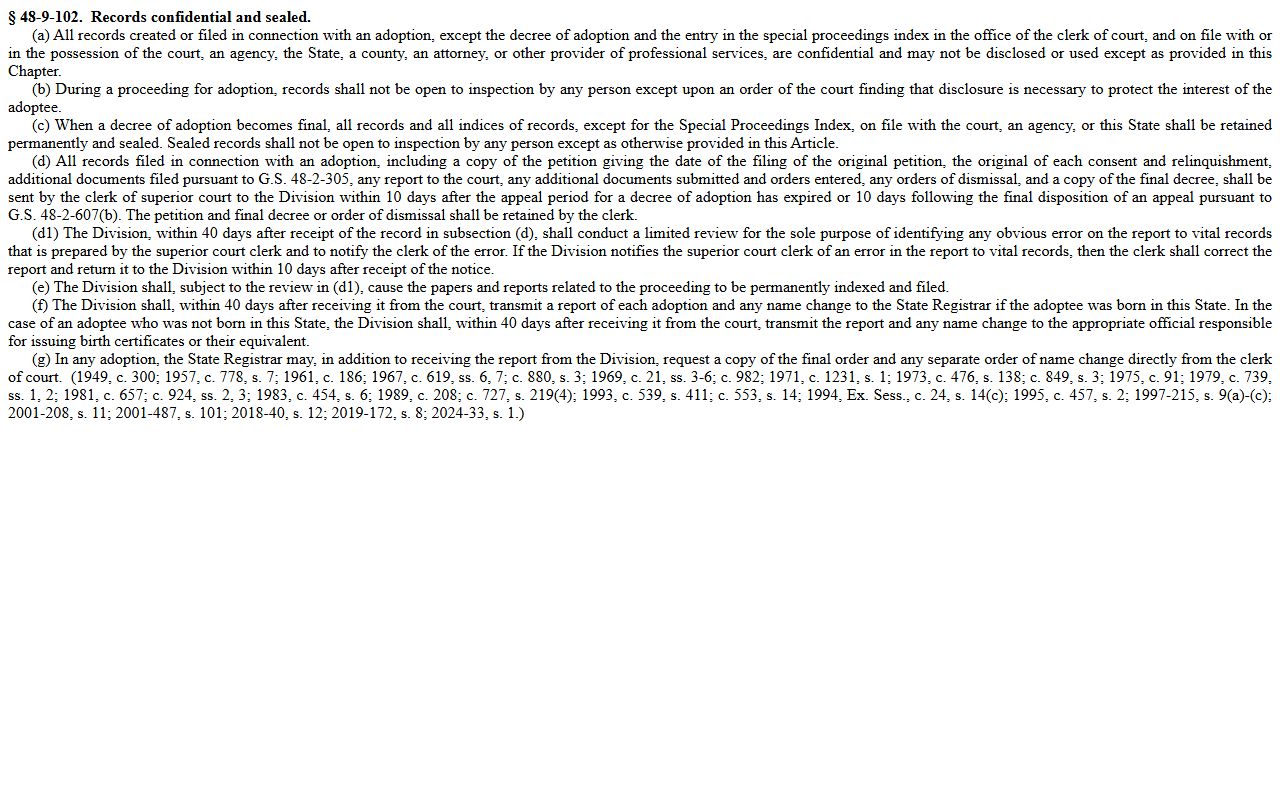
No. Adoption files are confidential under G.S. 48-9-102, shown below, and are not open case records. Public users generally cannot inspect adoption files without statutory authority or a court order. This is one of several record types closed by specific statute. See public records for the full list of exceptions.
Are mental health records confidential?
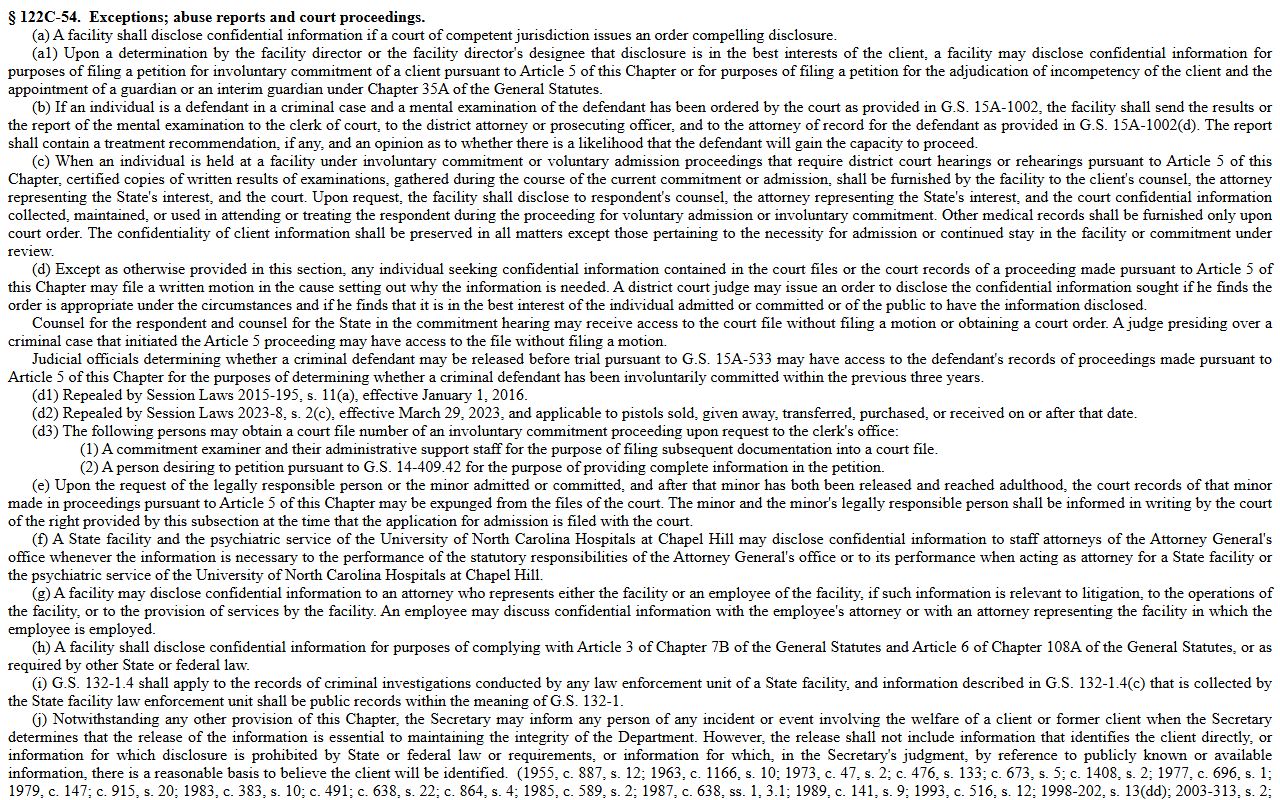
Yes. Mental health, developmental disability, and substance-use service records are protected under G.S. 122C-54, shown below. Court recordings in confidential proceedings also require court permission. These protections apply even when a related case is otherwise public. The probate records page notes that guardianship files can include restricted medical details.
Public Records and Warrants
How do I request a public record from the Judicial Branch?
Use the Judicial Branch Request a Public Record page for existing administrative public records. For court case files, use the Clerk of Superior Court instead. Decide whether you need an administrative record, a case file, a transcript, or a calendar, since the destination differs. Most fees are limited to the actual cost of reproduction under state law. The public records page explains the Chapter 132 framework and where to file.
How do I check for a Gaston County warrant?
There is no public online list of active Gaston County warrants. Call the Sheriff at 704-869-6800, the magistrates at (704) 852-3192, or the clerk at (704) 852-3100. If a warrant led to a booking, the inmate search will show it. If it ties to a missed court date, check the court-date search. Avoid third-party warrant sites, which are not official and are often outdated. The warrant records page covers how to resolve one safely.
Who is the Sheriff and District Attorney?
The Gaston County Sheriff is Chad Hawkins, and the office is reachable at 704-869-6800. The District Attorney for Prosecutorial District 38 is Travis Page, at (704) 852-3113, who prosecutes criminal cases and prepares the trial docket. The Public Defender for Defender District 38 is Rocky Lutz, at 704-852-3220, who represents eligible defendants. The District Attorney and the Public Defender are separate offices with opposite roles. For arrest and case detail, see arrest records.
Still Have Questions?
For the right office, see the Clerk of Superior Court. For broader access rules, see public records. For records by topic, browse court records, arrest records, inmate records, warrant records, marriage and divorce, or probate records.